Glacier National Park Rangers and Montana Fish, Wildlife and Parks biologists captured and euthanized a black bear in the Polebridge area on Wednesday, October 5, after numerous incidents in which the bear broke into vehicles, raided trash storage areas and caused damage trying to access a residence. The bear broke vehicle windows and pulled off car door handles to gain access into at least four cars and trucks, including a vehicle in the park. The bear obtained a food reward in most of these incidents.
The female bear was six years old and weighed 241 pounds, and had been previously captured in downtown Kalispell in June of 2008, after it was seen in the Woodland Park area. The bear was tagged and released in McGinnis Creek in the North Fork of the Flathead, and has not been involved in any other management situations since.
After the recent incidents in the Polebridge area, Montana Fish, Wildlife and Parks biologists and park rangers set traps and captured the suspect animal. After consultation between Montana Fish, Wildlife and Parks biologists and Glacier National Park personnel and verification that the correct animal had been captured, the bear was euthanized. This action is consistent with state and federal bear management plans.
This bear was determined to be a conditioned bear and a potential threat to human safety. Conditioned bears are those that have sought and obtained non-natural foods, destroyed property or displayed aggressive non-defensive behavior towards humans, and are removed from the wild. Conditioned bears are not relocated.
Black bears are not good candidates for animal capture facilities such as zoos and animal parks due to the plentiful nature of the species and the large number of problem black bears throughout the United States.
Bears will go to great lengths to obtain foods, particularly in the fall during their pre-denning hyperphagia or hyper-eating period. In the fall, bears will consume 20,000-30,000 calories per day in order to gain the fat reserves needed for winter.
To keep bears wild, people need to remain vigilant about securing attractants such as birdfeeders, trash, and pet and livestock feeds. It is also important to pick fruits such as apples, pears and plums as soon as the fruit is ripe, and to remove any fruit on the ground.
Visitors to Glacier National Park are reminded that the park is home to black and grizzly bears. Hikers are highly encouraged to hike in groups, make noise when hiking, and have bear spray accessible and know how to use it. For more information about recreating in bear country, please visit http://www.nps.gov/glac/naturescience/bears.htm.
Jeff
Hiking in Glacier.com

Sunday, October 9, 2011

Saturday, October 8, 2011
Public Invited to Brown-Bag Lecture
The Crown of the Continent Research Learning Center at Glacier National Park is hosting a brown-bag lecture on Tuesday, October 11, from 12- 1pm at the Community Building in West Glacier. The public is invited to join Dr. John Weaver share information from his recent report, Conservation Value of Roadless Areas for Vulnerable Fish and Wildlife Species in the Crown of the Continent Ecosystem, Montana.
The report was written to inform discussions and decisions about the remaining roadless areas in the Crown of the Continent Ecosystem. The goal is to assess the conservation value of 1.33 million acres of roadless areas for a suite of vulnerable species using latest scientific information and conservation needs.
Weaver is a senior conservation scientist for the Wildlife Conservation Society. Over the past 30 years, Weaver has played key roles in conservation of large carnivores in the United States and Canada. He has held leadership positions with the US Forest Service and US Fish & Wildlife Service, served on several recovery teams, and helped restore wolves to Yellowstone National Park and central Idaho.
Recently, Weaver's field research and recommendations on wide-ranging wildlife (grizzly bears and woodland caribou) around Nahanni National Park in the Northwest Territories led to a 7-fold expansion of that park to nearly 12,000 square miles.
Additional brown-bag lectures will be scheduled throughout the coming months. For more information, please visit www.nps.gov/glac/naturescience/ccrlc.htm or contact 406-888-5827.
Jeff
Hiking in Glacier.com
The report was written to inform discussions and decisions about the remaining roadless areas in the Crown of the Continent Ecosystem. The goal is to assess the conservation value of 1.33 million acres of roadless areas for a suite of vulnerable species using latest scientific information and conservation needs.
Weaver is a senior conservation scientist for the Wildlife Conservation Society. Over the past 30 years, Weaver has played key roles in conservation of large carnivores in the United States and Canada. He has held leadership positions with the US Forest Service and US Fish & Wildlife Service, served on several recovery teams, and helped restore wolves to Yellowstone National Park and central Idaho.
Recently, Weaver's field research and recommendations on wide-ranging wildlife (grizzly bears and woodland caribou) around Nahanni National Park in the Northwest Territories led to a 7-fold expansion of that park to nearly 12,000 square miles.
Additional brown-bag lectures will be scheduled throughout the coming months. For more information, please visit www.nps.gov/glac/naturescience/ccrlc.htm or contact 406-888-5827.
Jeff
Hiking in Glacier.com
Friday, October 7, 2011
Dead Men Walking: Search and Rescue in US National Parks
The September 2009 issue of Wilderness and Environmental Medicine published the results of a study called Dead Men Walking: Search and Rescue in US National Parks.
The study was conducted by Travis W. Heggie PhD and Michael E. Amundson BS from the University of North Dakota to identify search and rescue (SAR) trends in US National Parks.
There are some interesting statistics and conclusions from the study that I thought hikers and backpackers might be interested in:
* From 1992 to 2007 (the time period for the study) there were 78,488 individuals involved in 65,439 SAR incidents. This translates into 4090 SAR incidents, on average, each year.
* These incidents ended with 2659 fatalities, 24,288 ill or injured individuals, and 13,212 saves during the 16-year period.
* On average there were 11.2 SAR incidents each day at an average cost of $895 per operation.
* Total SAR costs from 1992 to 2007 were $58,572,164.
* In 2005, 50% of the 2430 SAR operations occurred in just 5 NPS units: Grand Canyon National Park (307) and Gateway National Recreation Area (293) reported the most SAR operations. Yosemite, Rocky Mountain National Park and Nevada’s Lake Mead National Recreation Area rounded out the top 5.
* Yosemite National Park accounted for 25% of the total NPS SAR costs ($1.2 million); Wrangell-St. Elias National Park and Preserve ($29,310) and Denali National Park and Preserve ($18,345) had the highest average SAR costs.
* Hiking (48%) and boating (21%) were the most common activities requiring SAR assistance.
* Hiking (22.8%), suicides (12.1%), swimming (10.1%), and boating (10.1%) activities were the most common activities resulting in fatalities.
* On average, one person dies every other day throughout our national park system.
* The study revealed that during those 16 years, young males, day hikers, and boaters needed rescue more than anyone else.
Conclusions:
Without the presence of NPS personnel responding to SAR incidents, 1 in 5 (20%) of those requesting SAR assistance would be a fatality. Future research and the development of any prevention efforts should focus on the 5 NPS units where 50% of all SAR incidents are occurring.
Perhaps all of this will serve as a reminder to be extra careful while exploring our national parks, forests and wilderness areas, and to be thankful that there are emergency personnel close by if we need them.

Jeff
HikinginGlacier.com
TetonHikingTrails.com
RockyMountainHikingTrails.com
Ramble On (2nd edition book on the rich history of hiking)
Exploring Glacier National Park
Exploring Grand Teton National Park
The study was conducted by Travis W. Heggie PhD and Michael E. Amundson BS from the University of North Dakota to identify search and rescue (SAR) trends in US National Parks.
There are some interesting statistics and conclusions from the study that I thought hikers and backpackers might be interested in:
* From 1992 to 2007 (the time period for the study) there were 78,488 individuals involved in 65,439 SAR incidents. This translates into 4090 SAR incidents, on average, each year.
* These incidents ended with 2659 fatalities, 24,288 ill or injured individuals, and 13,212 saves during the 16-year period.
* On average there were 11.2 SAR incidents each day at an average cost of $895 per operation.
* Total SAR costs from 1992 to 2007 were $58,572,164.
* In 2005, 50% of the 2430 SAR operations occurred in just 5 NPS units: Grand Canyon National Park (307) and Gateway National Recreation Area (293) reported the most SAR operations. Yosemite, Rocky Mountain National Park and Nevada’s Lake Mead National Recreation Area rounded out the top 5.
* Yosemite National Park accounted for 25% of the total NPS SAR costs ($1.2 million); Wrangell-St. Elias National Park and Preserve ($29,310) and Denali National Park and Preserve ($18,345) had the highest average SAR costs.
* Hiking (48%) and boating (21%) were the most common activities requiring SAR assistance.
* Hiking (22.8%), suicides (12.1%), swimming (10.1%), and boating (10.1%) activities were the most common activities resulting in fatalities.
* On average, one person dies every other day throughout our national park system.
* The study revealed that during those 16 years, young males, day hikers, and boaters needed rescue more than anyone else.
Conclusions:
Without the presence of NPS personnel responding to SAR incidents, 1 in 5 (20%) of those requesting SAR assistance would be a fatality. Future research and the development of any prevention efforts should focus on the 5 NPS units where 50% of all SAR incidents are occurring.
Perhaps all of this will serve as a reminder to be extra careful while exploring our national parks, forests and wilderness areas, and to be thankful that there are emergency personnel close by if we need them.

Jeff
HikinginGlacier.com
TetonHikingTrails.com
RockyMountainHikingTrails.com
Ramble On (2nd edition book on the rich history of hiking)
Exploring Glacier National Park
Exploring Grand Teton National Park
Tuesday, October 4, 2011
New Exhibits Tell Native American Story of Glacier National Park
New exhibits now greet Glacier National Park visitors at the St. Mary Visitor Center. The new visitor center exhibit entitled "At Home in This Place" focuses on tribal perspectives about the place we today call Glacier National Park. The new exhibits were installed in early July and were viewed by tribal leaders and elders Wednesday afternoon, July 14 during a dedication ceremony. As part of the dedication, tribal perspectives and remarks were offered by Peter (Rusty) Tatsey (Blackfeet), Vernon Finley (Kootenai) and Thompson Smith (Salish-Pend d'Oreille). Tribal singing and drumming groups performed honor songs on behalf of all three tribes. Remarks were offered on behalf of the National Park Service (NPS) by Park Superintendent Chas Cartwright and Hudson Bay District Interpreter Mark Wagner who served as the project coordinator.
According to Cartwright, "Several years of consultation with cultural experts from the Blackfeet, Kootenai and Salish and Pend d'Oreille tribes provided authenticity and a true tribal perspective on issues related to land, plants, animals, mountains and history of this area."
Although Tony Incashola was unable to attend the exhibit dedication, his written remarks were read by Thompson Smith, Tribal History and Ethnogeography Projects Director for the Salish-Pend d'Oreille Culture Committee. Incashola said of his people’s relationship to Glacier: "This is a refuge for the plants and animals, a small, relatively pristine corner of the world where we can still find quiet and solitude. So it is therefore also a place of refuge for those cultures that depend upon these things. For these reasons, the Salish and Pend d'Oreille are glad that this place was given protection a century ago."..."This exhibit represents a small measure of hope. We hope it can help raise awareness of the urgent need to change, to regain the kind of environmental stewardship that Indian people exerted here for millennia. We are seeing the tribes and the park and many other partners come together more and more to learn from the past in order to create a more just and sustainable future."
There are five new main exhibits: 1) Welcome-panels from each of the tribes detailing local Native peoples and their historic and current relationship with the land; 2) Bittersweet Meanings looks at changes faced by tribes with the creation of Glacier National Park; some good, others difficult; 3) Backbone of the World provides native perspectives on the land, mountains, creation stories, and place names; 4) The Wisdom in Spoken Words features oral histories and traditions with video of stories about Glacier by tribal elders. The exhibit includes an indoor tipi setting for sitting and listening to these stories; 5) Animal Lessons is a large winter scene diorama featuring elk, wolves, coyote, and grizzly bear which includes animal stories told by tribal leaders.
Additional exhibits in the lobby focus on other park stories and help interpret resources seen from the building.
These include the following panels: Where the Prairie Meets the Mountains, Who Lives in the Meadows, and Glaciers on the Move.
There is also a new interactive 3-D park topographic map with optic fiber lights highlighting the following: Continental Divides depicts the Continental Divide, Hudson Bay Divide, Triple Divide Peak; Glacier's 10,000-foot Mountains; Tourism and Early Park Days shows locations of historic hotels and chalets; and Goodbye to the Glaciers is an animated look at the disappearance of park glaciers from 1850 to 2020.
These new exhibits will be permanently on display at the St. Mary Visitor Center. Summer hours of operation at the St. Mary Visitor Center are 7 a.m. to 9 p.m.
Jeff
Hiking in Glacier.com
According to Cartwright, "Several years of consultation with cultural experts from the Blackfeet, Kootenai and Salish and Pend d'Oreille tribes provided authenticity and a true tribal perspective on issues related to land, plants, animals, mountains and history of this area."
Although Tony Incashola was unable to attend the exhibit dedication, his written remarks were read by Thompson Smith, Tribal History and Ethnogeography Projects Director for the Salish-Pend d'Oreille Culture Committee. Incashola said of his people’s relationship to Glacier: "This is a refuge for the plants and animals, a small, relatively pristine corner of the world where we can still find quiet and solitude. So it is therefore also a place of refuge for those cultures that depend upon these things. For these reasons, the Salish and Pend d'Oreille are glad that this place was given protection a century ago."..."This exhibit represents a small measure of hope. We hope it can help raise awareness of the urgent need to change, to regain the kind of environmental stewardship that Indian people exerted here for millennia. We are seeing the tribes and the park and many other partners come together more and more to learn from the past in order to create a more just and sustainable future."
There are five new main exhibits: 1) Welcome-panels from each of the tribes detailing local Native peoples and their historic and current relationship with the land; 2) Bittersweet Meanings looks at changes faced by tribes with the creation of Glacier National Park; some good, others difficult; 3) Backbone of the World provides native perspectives on the land, mountains, creation stories, and place names; 4) The Wisdom in Spoken Words features oral histories and traditions with video of stories about Glacier by tribal elders. The exhibit includes an indoor tipi setting for sitting and listening to these stories; 5) Animal Lessons is a large winter scene diorama featuring elk, wolves, coyote, and grizzly bear which includes animal stories told by tribal leaders.
Additional exhibits in the lobby focus on other park stories and help interpret resources seen from the building.
These include the following panels: Where the Prairie Meets the Mountains, Who Lives in the Meadows, and Glaciers on the Move.
There is also a new interactive 3-D park topographic map with optic fiber lights highlighting the following: Continental Divides depicts the Continental Divide, Hudson Bay Divide, Triple Divide Peak; Glacier's 10,000-foot Mountains; Tourism and Early Park Days shows locations of historic hotels and chalets; and Goodbye to the Glaciers is an animated look at the disappearance of park glaciers from 1850 to 2020.
These new exhibits will be permanently on display at the St. Mary Visitor Center. Summer hours of operation at the St. Mary Visitor Center are 7 a.m. to 9 p.m.
Jeff
Hiking in Glacier.com
Sunday, October 2, 2011
Eight steps to prevent Search and Rescues
Backpacker Magazine published an article that details 8 steps that (the author claims) would have prevented 95% of the search and rescues (SAR) incidents and accidents that occurred over the summer season.
These are all common sense measures, but they're always good to keep in mind whenever you head out into the wild:
1) Never assume that your expertise will keep you safe
2) Get in the habit of turning around every 5-10 minutes and looking at your route from the 180 view
3) If you get disoriented, always retrace your steps to get back on track.
4) Take some gear, including extra clothes, a rain shell, a map and compass, a butane lighter, a headlamp, and perhaps a cell phone, pocket flares, or an emergency beacon.
5) Know the weather report.
6) Have a plan
7) Don't scramble unroped on cliffs, drop-offs or snowfields, especially if you're alone.
8) Don't be afraid to dial back your plans (i.e. don't let your ego get the best of you)
You can read the full article by clicking here.
Another thing to beware of is the first five minutes after you first start to question as to whether you might be lost or not. According to Professor Hike on Backpacker Magazine, this is the most critical time period for hikers to prevent themselves from becoming lost. The professor offers three personal case studies to show you what he means. You can click here to read the article.
*******************************************************************************
From Montana to New Mexico, the American Rockies stretch for more than a thousand miles. Within this spectacular mountain range are thousands of miles of hiking trails. With such an overwhelming number of options, how will you find and choose the most scenic and rewarding hikes?
Ultimate Hiking Guide to the Rocky Mountains takes all the guesswork out by focusing on some of the most amazing hikes across this range, and provides you with a handpicked list of options that will allow you to make the most of your trips in the Rockies: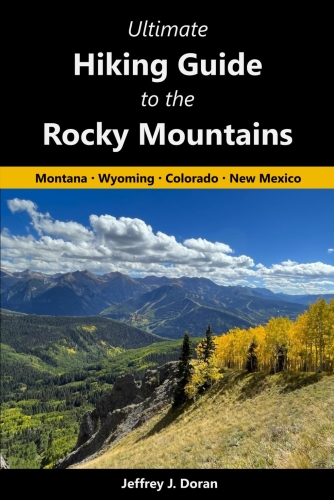
These are all common sense measures, but they're always good to keep in mind whenever you head out into the wild:
1) Never assume that your expertise will keep you safe
2) Get in the habit of turning around every 5-10 minutes and looking at your route from the 180 view
3) If you get disoriented, always retrace your steps to get back on track.
4) Take some gear, including extra clothes, a rain shell, a map and compass, a butane lighter, a headlamp, and perhaps a cell phone, pocket flares, or an emergency beacon.
5) Know the weather report.
6) Have a plan
7) Don't scramble unroped on cliffs, drop-offs or snowfields, especially if you're alone.
8) Don't be afraid to dial back your plans (i.e. don't let your ego get the best of you)
You can read the full article by clicking here.
Another thing to beware of is the first five minutes after you first start to question as to whether you might be lost or not. According to Professor Hike on Backpacker Magazine, this is the most critical time period for hikers to prevent themselves from becoming lost. The professor offers three personal case studies to show you what he means. You can click here to read the article.
*******************************************************************************
From Montana to New Mexico, the American Rockies stretch for more than a thousand miles. Within this spectacular mountain range are thousands of miles of hiking trails. With such an overwhelming number of options, how will you find and choose the most scenic and rewarding hikes?
Ultimate Hiking Guide to the Rocky Mountains takes all the guesswork out by focusing on some of the most amazing hikes across this range, and provides you with a handpicked list of options that will allow you to make the most of your trips in the Rockies:
Subscribe to:
Posts (Atom)