Effective immediately, Two Medicine Lake in Glacier National Park will close to boating for the rest of the season due to the closing of the Two Medicine Aquatic Invasive Species (AIS) inspection station. Boating and AIS inspection stations in all other areas of the park remain open for the remainder of the season, including the St. Mary station operated by the Blackfeet Tribe.
Glacier National Park partnered with the Blackfeet Tribe and Glacier National Park Conservancy to open AIS stations at St. Mary and Two Medicine lakes for the first time since the 2019 season. While other boat inspection stations in the park, including the AIS station in St. Mary, continue to be staffed and to operate successfully, the remote location of Two Medicine has contributed to challenges in staffing and equipment.
Waters from Glacier's extensive system of lakes, rivers and streams are the headwaters of three major watersheds that reach the Columbia River System and the Pacific Ocean; the Missouri River and the Atlantic Ocean via the Gulf of Mexico; and the South Saskatchewan River and Hudson Bay. It is critical that these headwaters are protected to prevent the spread of invasive species throughout the continent.
"We’ve been successful at reopening the St. Mary station – which is purposefully designed for boat inspections and is being staffed by our partners – but the set-up at Two Medicine has been more challenging,” said Dave Roemer, Superintendent of Glacier National Park. “Taking a pause will allow us to dedicate our collective efforts on the east side of the park to inspection stations at St. Mary, Many Glacier, and Browning to ensure the protection of these waters. We are grateful for our ongoing partnership, and plan to get an early start next year to have inspection stations for boating at Two Medicine, St. Mary, and lakes in the Many Glacier area in 2024."
All watercraft launched within Glacier National Park must be inspected for AIS prior to launching. AIS inspections are required for protection against non-native species that can devastate native aquatic ecosystems, as well as negatively change visitor use and enjoyment of park waterways. AIS can come in many forms, including animals such as zebra and quagga mussels, plants such as Eurasian watermilfoil, or pathogens such as whirling disease. These species can hitch a ride on any equipment including motorized and non- motorized watercraft such as float tubes, kayaks, paddleboards, canoes, and trailers.
For more details, including location and hours of operation for all AIS stations in the park, please visit the park boating webpage.
Jeff
HikinginGlacier.com
TetonHikingTrails.com
RockyMountainHikingTrails.com
Ramble On (2nd edition book on the rich history of hiking)
Exploring Glacier National Park
Exploring Grand Teton National Park

Tuesday, August 22, 2023

Monday, August 21, 2023
Grand Teton seeks input on the future of visitor use and visitor experiences
Grand Teton National Park is seeking public input through October 10, 2023, on how visitors use, experience and access the park. The park will use this feedback to better understand public perceptions as it continuously looks to improve visitor experiences.
There are two opportunities to learn more about this public engagement process and ask park staff questions. The same material will be presented at each meeting.
Virtual meeting on August 31 from 4 to 5:30 p.m. (MST). To join the meeting, please visit the National Park Service’s Planning, Environment and Public Comment (PEPC) website. Link to the virtual meeting will be provided the week of August 28.
In-person meeting on September 20 from 4 to 6 p.m. (MST) at the Teton County Library Ordway Auditorium in Jackson, WY.
The park also invites the public to submit comments through the PEPC website. Comments submitted through social media, phone calls, email or mail will not be accepted.
Jeff
HikinginGlacier.com
TetonHikingTrails.com
RockyMountainHikingTrails.com
Ramble On (2nd edition book on the rich history of hiking)
Exploring Glacier National Park
Exploring Grand Teton National Park
There are two opportunities to learn more about this public engagement process and ask park staff questions. The same material will be presented at each meeting.
Virtual meeting on August 31 from 4 to 5:30 p.m. (MST). To join the meeting, please visit the National Park Service’s Planning, Environment and Public Comment (PEPC) website. Link to the virtual meeting will be provided the week of August 28.
In-person meeting on September 20 from 4 to 6 p.m. (MST) at the Teton County Library Ordway Auditorium in Jackson, WY.
The park also invites the public to submit comments through the PEPC website. Comments submitted through social media, phone calls, email or mail will not be accepted.
Jeff
HikinginGlacier.com
TetonHikingTrails.com
RockyMountainHikingTrails.com
Ramble On (2nd edition book on the rich history of hiking)
Exploring Glacier National Park
Exploring Grand Teton National Park
Saturday, August 19, 2023
Black bear obtains human food along Phelps Lake shore
On August 11, a black bear at Phelps Lake in Grand Teton National Park found an unattended backpack and consumed human food. This follows three other recent incidents of black bears accessing human items left along lakeshores while visitors were recreating in the water. In the last five years, almost half of all human-black bear conflicts within Grand Teton have occurred around lakes.
Proper food storage is mandatory in Grand Teton and visitors are required to properly secure all attractants for the protection of bears and other wildlife, as well as for human safety. These regulations apply whether you are camping, having a picnic, or swimming. Travelers from around the world come to Grand Teton to observe wild bears roaming across the iconic landscape. However, the opportunity to see a bear means that we have an extra responsibility to do our part to protect these animals by properly securing anything that may attract them.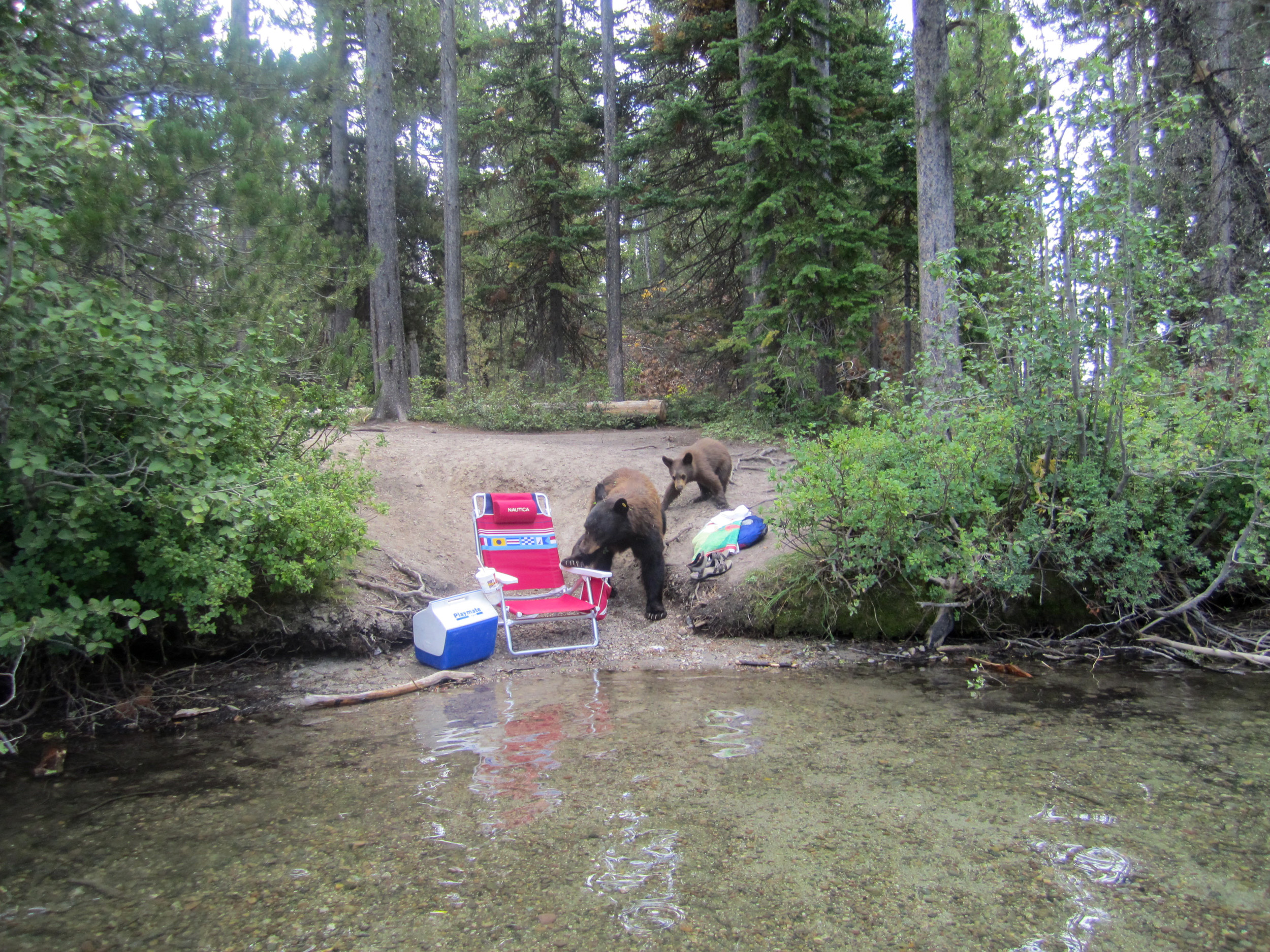 When a bear is allowed to obtain human food, it can become “food-conditioned” and begin actively seeking out unnatural food. When this occurs, a bear’s behavior can become dangerously bold and a threat to public safety. If you observe a bear accessing human items or acting boldly, please report the incident to the nearest visitor center. The earlier park officials know about the bear’s behavior, the more options the park has to prevent further human-bear conflicts and avoid having to lethally remove the bear.
The solution to not creating food-conditioned bears is easy and we need your help. Take a moment to properly store all attractants, including food, coolers, clean or dirty cooking gear, pet dishes, toiletries, and anything that has a scent. Keep these items in a hard-sided vehicle with the windows rolled up or use a bear-resistant food storage locker or “bear box,” available in certain locations. If you recreate at one of the park’s lakeshores, make a plan for what you will do with your food items. You could opt to designate someone to stay with your food items or leave them in your closed vehicle. Remember to never leave your backpack farther than arm’s reach at all times. Commonly, when a bear finds human food, it involves visitors abandoning their items for just a moment - but just a moment away from your backpack can result in a bear’s death.
Be a steward for Grand Teton’s bears. Have a plan to secure your attractants when you visit the park. By each of us doing our part, we can ensure the long-term future of the park’s bear population. We can’t do it without you.
For more information on staying safe in bear country, please visit go.nps.gov/tetonbears.
Jeff
HikinginGlacier.com
TetonHikingTrails.com
RockyMountainHikingTrails.com
Ramble On (2nd edition book on the rich history of hiking)
Exploring Glacier National Park
Exploring Grand Teton National Park
Proper food storage is mandatory in Grand Teton and visitors are required to properly secure all attractants for the protection of bears and other wildlife, as well as for human safety. These regulations apply whether you are camping, having a picnic, or swimming. Travelers from around the world come to Grand Teton to observe wild bears roaming across the iconic landscape. However, the opportunity to see a bear means that we have an extra responsibility to do our part to protect these animals by properly securing anything that may attract them.
The solution to not creating food-conditioned bears is easy and we need your help. Take a moment to properly store all attractants, including food, coolers, clean or dirty cooking gear, pet dishes, toiletries, and anything that has a scent. Keep these items in a hard-sided vehicle with the windows rolled up or use a bear-resistant food storage locker or “bear box,” available in certain locations. If you recreate at one of the park’s lakeshores, make a plan for what you will do with your food items. You could opt to designate someone to stay with your food items or leave them in your closed vehicle. Remember to never leave your backpack farther than arm’s reach at all times. Commonly, when a bear finds human food, it involves visitors abandoning their items for just a moment - but just a moment away from your backpack can result in a bear’s death.
Be a steward for Grand Teton’s bears. Have a plan to secure your attractants when you visit the park. By each of us doing our part, we can ensure the long-term future of the park’s bear population. We can’t do it without you.
For more information on staying safe in bear country, please visit go.nps.gov/tetonbears.
Jeff
HikinginGlacier.com
TetonHikingTrails.com
RockyMountainHikingTrails.com
Ramble On (2nd edition book on the rich history of hiking)
Exploring Glacier National Park
Exploring Grand Teton National Park
Thursday, August 17, 2023
NPS Seeks Public Input to Help Improve Visitor Experiences at Glacier National Park
Glacier National Park is seeking public feedback through September 30, 2023, on how visitors will access and experience the park in 2024. The park will host a series of virtual and in-person public meetings in late August to provide information from the past vehicle reservation pilot programs and answer questions. The public input from this process will be used to inform a strategy for summer 2024.
Over the past two decades, annual visitation at Glacier National Park has increased from approximately 1.5 million to over 3 million. Much of this use is concentrated along the Going-to-the-Sun Road corridor and other front-country destinations during the peak season of June through September.
The park is in the third summer of piloting a vehicle reservation system for major park entrances. The pilots were initiated in summer 2021 as a response to increasing issues with traffic congestion including backups onto US Highway 2, infrastructure capacity, and impacts to park resources from high concentrations of people in the most popular areas of the park. Ongoing pilot reservation systems in summers 2022 and 2023 have provided opportunities to learn more and explore their viability in achieving desired conditions in the park.
Since the park initiated the pilot, it has collected and analyzed visitor use data, as well as feedback from the local community and others, to refine the parameters of the reservation system and continue to improve the visitor experience.
“We have learned a lot from the last three years of pilot reservation systems,” said Park Superintendent Dave Roemer. “We’d like to hear from the public about what has worked, what hasn’t worked, and what ideas they have for managing high visitation at Glacier for 2024. We are listening, and truly need that input before we begin to develop a strategy for next summer.”
There are several opportunities to learn more about this public engagement process and ask park staff questions. Scheduled meetings include:
Wednesday, August 23-Virtual meeting from 6 to 8 pm. Join by following the link at https://parkplanning.nps.gov/MeetingNotices.cfm?projectID=118357
Monday, August 28-Open house from 5:30 to 7:30 pm at the St. Mary Visitor Center on the east side of the park.
Tuesday, August 29-Open house from 5:30 to 7:30 pm at the Cedar Creek Lodge in Columbia Falls.
“The goal of this effort is to provide the best possible access while protecting the park and ensuring visitors have meaningful and enjoyable experiences,” Roemer said. “This work is central to the National Park Service mission, and we are looking forward to continued engagement with our partners, communities, tribes, and park friends to make sure that happens.”
The project website provides a summary of key issues, the history of visitation and visitor use management in the park, and instructions for how to formally submit comments.
Jeff
HikinginGlacier.com
TetonHikingTrails.com
RockyMountainHikingTrails.com
Ramble On (2nd edition book on the rich history of hiking)
Exploring Glacier National Park
Exploring Grand Teton National Park
Over the past two decades, annual visitation at Glacier National Park has increased from approximately 1.5 million to over 3 million. Much of this use is concentrated along the Going-to-the-Sun Road corridor and other front-country destinations during the peak season of June through September.
The park is in the third summer of piloting a vehicle reservation system for major park entrances. The pilots were initiated in summer 2021 as a response to increasing issues with traffic congestion including backups onto US Highway 2, infrastructure capacity, and impacts to park resources from high concentrations of people in the most popular areas of the park. Ongoing pilot reservation systems in summers 2022 and 2023 have provided opportunities to learn more and explore their viability in achieving desired conditions in the park.
Since the park initiated the pilot, it has collected and analyzed visitor use data, as well as feedback from the local community and others, to refine the parameters of the reservation system and continue to improve the visitor experience.
“We have learned a lot from the last three years of pilot reservation systems,” said Park Superintendent Dave Roemer. “We’d like to hear from the public about what has worked, what hasn’t worked, and what ideas they have for managing high visitation at Glacier for 2024. We are listening, and truly need that input before we begin to develop a strategy for next summer.”
There are several opportunities to learn more about this public engagement process and ask park staff questions. Scheduled meetings include:
Wednesday, August 23-Virtual meeting from 6 to 8 pm. Join by following the link at https://parkplanning.nps.gov/MeetingNotices.cfm?projectID=118357
Monday, August 28-Open house from 5:30 to 7:30 pm at the St. Mary Visitor Center on the east side of the park.
Tuesday, August 29-Open house from 5:30 to 7:30 pm at the Cedar Creek Lodge in Columbia Falls.
“The goal of this effort is to provide the best possible access while protecting the park and ensuring visitors have meaningful and enjoyable experiences,” Roemer said. “This work is central to the National Park Service mission, and we are looking forward to continued engagement with our partners, communities, tribes, and park friends to make sure that happens.”
The project website provides a summary of key issues, the history of visitation and visitor use management in the park, and instructions for how to formally submit comments.
Jeff
HikinginGlacier.com
TetonHikingTrails.com
RockyMountainHikingTrails.com
Ramble On (2nd edition book on the rich history of hiking)
Exploring Glacier National Park
Exploring Grand Teton National Park
Tuesday, August 15, 2023
Plan ahead for upcoming construction closures in Grand Teton
Travelers in Grand Teton National Park should plan ahead for construction closures during installation of new restroom facilities throughout the park. Closures are necessary for public safety and to facilitate the use of a crane.
Tentative construction closures
Aug. 17 – 25: Signal Mountain Summit Road will be closed.
Aug. 17 – Sept. 9: Two Ocean Lake Road will be closed, with no access to Two Ocean Lake parking during construction.
Aug. 22: String Lake Boat Launch parking, String Lake Outlet Trailhead parking, and Catholic Bay parking will be closed.
Motorists should plan ahead for closures and reduce speeds in areas where work is occurring. For status of park roads, visit Grand Teton’s live road status map at go.nps.gov/tetonroads or call 307-739-3682. Construction schedules may change or be delayed without notice due to weather conditions or other circumstances.
Jeff
HikinginGlacier.com
TetonHikingTrails.com
RockyMountainHikingTrails.com
Ramble On (2nd edition book on the rich history of hiking)
Exploring Glacier National Park
Exploring Grand Teton National Park
Tentative construction closures
Aug. 17 – 25: Signal Mountain Summit Road will be closed.
Aug. 17 – Sept. 9: Two Ocean Lake Road will be closed, with no access to Two Ocean Lake parking during construction.
Aug. 22: String Lake Boat Launch parking, String Lake Outlet Trailhead parking, and Catholic Bay parking will be closed.
Motorists should plan ahead for closures and reduce speeds in areas where work is occurring. For status of park roads, visit Grand Teton’s live road status map at go.nps.gov/tetonroads or call 307-739-3682. Construction schedules may change or be delayed without notice due to weather conditions or other circumstances.
Jeff
HikinginGlacier.com
TetonHikingTrails.com
RockyMountainHikingTrails.com
Ramble On (2nd edition book on the rich history of hiking)
Exploring Glacier National Park
Exploring Grand Teton National Park
Subscribe to:
Posts (Atom)