The two photos below of the Granite Park Chalet in Glacier National Park were taken by T. J. Hileman in 1925, just ten years after it was constructed by the Great Northern Railway. The rustic lodge was the last of the nine backcountry chalets built by the railroad, all of which were part of an interconnected system of trails, tent camps, backcountry chalets and frontcountry lodges [more details on this system here]. All were constructed to provide comfortable accommodations within Glacier during the era before automobile travel become an important mode of transportation. Both Sperry and Granite Park, the only chalets that survive to this day, still offer overnight accommodations for hikers. Both are National Historic Landmarks.
Compared to Sperry Chalet, the Granite Park Chalet is much more basic, and is essentially a simple hiker's hostel, with virtually no amenities. It has 12 guest rooms, each with 2 to 6 bunks. Although there's no electricity, the common-area kitchen does have a propane stove that you can use to cook a warm lunch or dinner. The chalet also sells packaged foods, beverages, snacks, and bottled water to day hikers.
Although accommodations are limited, the chalet is still a popular destination for hikers on the Highline Trail, as the upfront views of Heavens Peak are second to none:
Here's another photo of a "man playing with bear at Granite Chalet" in 1924. This photo was taken by John Morten:
*******************************************************************************
Glacier National Park preserves more than a million acres of some of the most spectacular scenery on Earth. With more than 740 miles of trails meandering throughout this vast park, how will you find and choose the most scenic and rewarding hikes?
Exploring Glacier National Park takes all the guesswork out by focusing on the most amazing hikes, and provides you with handpicked recommendations that will allow you to make the most of your trip to Glacier:
Tuesday, January 16, 2024
Friday, January 12, 2024
Winter recreation begins on park roads in Grand Teton Today
Opportunities for over-snow winter recreation will be available beginning Friday, January 12, on Teton Park, Signal Mountain Summit and Moose-Wilson roads in Grand Teton National Park. Enjoy activities such as cross-country skiing, snowshoeing and walking during this special time of year.
Teton Park Road will be groomed between Taggart Lake parking and Signal Mountain Lodge, January 12 through mid-March, as conditions allow. The road will be groomed three times a week on Tuesdays, Fridays and Sundays, weather permitting. Four lanes will be groomed from Taggart Lake parking to one mile north and then two lanes to Signal Mountain Lodge, which will help expedite spring plow operations to ensure a timely opening of the Teton Park Road for cycling and walking during the month of April.
Grooming is made possible through the financial support from Grand Teton National Park Foundation and a Federal Highway Administration Recreational Trails Program Grant managed by the State of Wyoming.
Parking is available at Taggart Lake Trailhead, Cottonwood Creek Picnic Area and at the gate at the north end of the Teton Park Road near Signal Mountain Lodge.
The use of wheeled vehicles including bicycles, snow/fat/electric bikes, are not permitted on roads designated for winter recreation activities. Bikes are only allowed on roadways open to motor vehicles.
Dogs are welcome to recreate alongside their owners on the Teton Park Road. For the safety of wildlife, visitors and their pets, dogs must always be leashed, are not allowed in the backcountry and must be picked up after. Dog sledding and skijoring are prohibited within Grand Teton National Park and the John D. Rockefeller, Jr. Memorial Parkway.
Additional Winter Recreation Activities
* Ranger-led snowshoe hikes are offered through March 15 on Wednesdays and Fridays from 1:30 to 3:30 p.m. Reservations are required and can be made by calling 307-739-3399 Mon.—Fri.
* Granite Canyon Trailhead is open, providing a better visitor experience for those planning to hike, ski, or take in the magnificent scenery that the Moose-Wilson Corridor offers. Improvements to the trailhead include an expanded parking lot that accommodates more vehicles and more visitors to the trailhead, new sidewalks that improve accessibility and new trailhead amenities that include vault toilets, a bike rack, bench and an information kiosk. New signage improves wayfinding along the roadway and new removable bollards and snow poles will help improve visitor safety as well as snowplow operations. Access the trailhead from the south, via Hwy 390 through the Granite Canyon Entrance.
* Winter activities at Colter Bay include primitive camping, cross-country skiing, snowshoeing and ice fishing on Jackson Lake. Primitive winter camping is allowed in the Colter Bay Visitor Center parking lot through April 15, with a $5 per night fee which can be paid at the Moran Entrance Station.
* Backcountry camping permits are available 24 hours in advance. Call the park’s permit office at 307-739-3309 Mon.—Fri. On weekends, please call Teton Interagency Dispatch Center at 307-739-3301.
* Fresh powder turns are not worth your life! Always check bridgertetonavalanchecenter.org before heading out into the backcountry and use careful snowpack assessment and good terrain choices to keep yourself safe.
* Be a steward for bighorn sheep and other wildlife who survive brutal winter conditions in the Tetons. Stress from human disturbances like skiing and snowboarding can push these iconic animals towards starvation. Protect wildlife by observing closures, avoiding bighorn sheep winter zones and giving all wildlife plenty of space (100 yards from bears and wolves and 25 yards from all other wildlife). Visit go.nps.gov/tetonclosures for more information and see the entire Teton Range bighorn sheep winter zones and closure map at tetonsheep.org.
Limited services and seasonal closures make a winter visit to Grand Teton much different than a summer experience. Before visiting the park, be sure to:
* Check the weather and park conditions at go.nps.gov/tetonconditions.
* Know which roads are open by checking current road status at go.nps.gov/tetonroads. Slow down, be alert and drive safely.
* Pack plenty of food, water and extra layers of clothing.
For more helpful planning tools, visit Winter in Grand Teton.
Jeff
HikinginGlacier.com
TetonHikingTrails.com
RockyMountainHikingTrails.com
Ramble On (2nd edition book on the rich history of hiking)
Exploring Glacier National Park
Exploring Grand Teton National Park

Teton Park Road will be groomed between Taggart Lake parking and Signal Mountain Lodge, January 12 through mid-March, as conditions allow. The road will be groomed three times a week on Tuesdays, Fridays and Sundays, weather permitting. Four lanes will be groomed from Taggart Lake parking to one mile north and then two lanes to Signal Mountain Lodge, which will help expedite spring plow operations to ensure a timely opening of the Teton Park Road for cycling and walking during the month of April.
Grooming is made possible through the financial support from Grand Teton National Park Foundation and a Federal Highway Administration Recreational Trails Program Grant managed by the State of Wyoming.
Parking is available at Taggart Lake Trailhead, Cottonwood Creek Picnic Area and at the gate at the north end of the Teton Park Road near Signal Mountain Lodge.
The use of wheeled vehicles including bicycles, snow/fat/electric bikes, are not permitted on roads designated for winter recreation activities. Bikes are only allowed on roadways open to motor vehicles.
Dogs are welcome to recreate alongside their owners on the Teton Park Road. For the safety of wildlife, visitors and their pets, dogs must always be leashed, are not allowed in the backcountry and must be picked up after. Dog sledding and skijoring are prohibited within Grand Teton National Park and the John D. Rockefeller, Jr. Memorial Parkway.
Additional Winter Recreation Activities
* Ranger-led snowshoe hikes are offered through March 15 on Wednesdays and Fridays from 1:30 to 3:30 p.m. Reservations are required and can be made by calling 307-739-3399 Mon.—Fri.
* Granite Canyon Trailhead is open, providing a better visitor experience for those planning to hike, ski, or take in the magnificent scenery that the Moose-Wilson Corridor offers. Improvements to the trailhead include an expanded parking lot that accommodates more vehicles and more visitors to the trailhead, new sidewalks that improve accessibility and new trailhead amenities that include vault toilets, a bike rack, bench and an information kiosk. New signage improves wayfinding along the roadway and new removable bollards and snow poles will help improve visitor safety as well as snowplow operations. Access the trailhead from the south, via Hwy 390 through the Granite Canyon Entrance.
* Winter activities at Colter Bay include primitive camping, cross-country skiing, snowshoeing and ice fishing on Jackson Lake. Primitive winter camping is allowed in the Colter Bay Visitor Center parking lot through April 15, with a $5 per night fee which can be paid at the Moran Entrance Station.
* Backcountry camping permits are available 24 hours in advance. Call the park’s permit office at 307-739-3309 Mon.—Fri. On weekends, please call Teton Interagency Dispatch Center at 307-739-3301.
* Fresh powder turns are not worth your life! Always check bridgertetonavalanchecenter.org before heading out into the backcountry and use careful snowpack assessment and good terrain choices to keep yourself safe.
* Be a steward for bighorn sheep and other wildlife who survive brutal winter conditions in the Tetons. Stress from human disturbances like skiing and snowboarding can push these iconic animals towards starvation. Protect wildlife by observing closures, avoiding bighorn sheep winter zones and giving all wildlife plenty of space (100 yards from bears and wolves and 25 yards from all other wildlife). Visit go.nps.gov/tetonclosures for more information and see the entire Teton Range bighorn sheep winter zones and closure map at tetonsheep.org.
Limited services and seasonal closures make a winter visit to Grand Teton much different than a summer experience. Before visiting the park, be sure to:
* Check the weather and park conditions at go.nps.gov/tetonconditions.
* Know which roads are open by checking current road status at go.nps.gov/tetonroads. Slow down, be alert and drive safely.
* Pack plenty of food, water and extra layers of clothing.
For more helpful planning tools, visit Winter in Grand Teton.
Jeff
HikinginGlacier.com
TetonHikingTrails.com
RockyMountainHikingTrails.com
Ramble On (2nd edition book on the rich history of hiking)
Exploring Glacier National Park
Exploring Grand Teton National Park
Wednesday, January 10, 2024
"The Big Trail"
According to Rocky Mountain National Park: A History, at least four Clovis and Folsom projectile points have been found in Rocky Mountain, suggesting that Paleo-Indians were crossing through the future national park at least ten to fifteen thousand years ago. Other artifacts, such as tools and fragments of pottery, have also been found. Abner Sprague, one of the first settlers in the Estes Park area, once remarked that "the Indians made Estes Park a summer resort there is no question, as evidence of their summer camps were everywhere throughout the Park when the White pioneer came."
Within the last thousand years the Ute Indians moved into the Rocky Mountain region. By the early 1800s, so did the Arapahos. Both the Arapaho and Ute Indians likely traveled across the park using east-west routes such as Trail Ridge, Forest Canyon, Fall River and Flattop Mountain in order to reach traditional hunting grounds on the Great Plains. The Arapaho Indians referred to the Flattop Mountain corridor as "The Big Trail". At one time the Flattop Mountain Trail was also known as the Grand Trail. A pathway was formally constructed in 1925, was rehabilitated by the Civilian Conservation Corps in 1940, and is now currently listed on the National Register of Historic Places.
*******************************************************************************
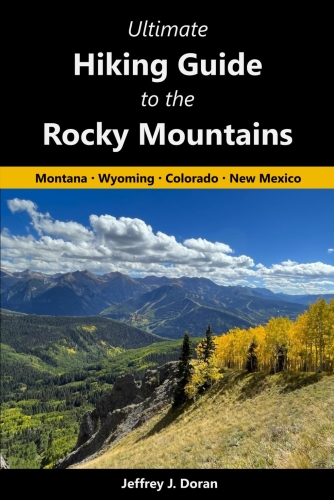
From Montana to New Mexico, the American Rockies stretch for more than a thousand miles. Within this spectacular mountain range are thousands of miles of hiking trails. With such an overwhelming number of options, how will you find and choose the most scenic and rewarding hikes?
Ultimate Hiking Guide to the Rocky Mountains takes all the guesswork out by focusing on some of the most amazing hikes across this range, and provides you with a handpicked list of options that will allow you to make the most of your trips in the Rockies:
Within the last thousand years the Ute Indians moved into the Rocky Mountain region. By the early 1800s, so did the Arapahos. Both the Arapaho and Ute Indians likely traveled across the park using east-west routes such as Trail Ridge, Forest Canyon, Fall River and Flattop Mountain in order to reach traditional hunting grounds on the Great Plains. The Arapaho Indians referred to the Flattop Mountain corridor as "The Big Trail". At one time the Flattop Mountain Trail was also known as the Grand Trail. A pathway was formally constructed in 1925, was rehabilitated by the Civilian Conservation Corps in 1940, and is now currently listed on the National Register of Historic Places.
*******************************************************************************
From Montana to New Mexico, the American Rockies stretch for more than a thousand miles. Within this spectacular mountain range are thousands of miles of hiking trails. With such an overwhelming number of options, how will you find and choose the most scenic and rewarding hikes?
Ultimate Hiking Guide to the Rocky Mountains takes all the guesswork out by focusing on some of the most amazing hikes across this range, and provides you with a handpicked list of options that will allow you to make the most of your trips in the Rockies:
Monday, January 8, 2024
Sperry and Granite Park Chalets 2024 reservations open today
A couple days ago the Sperry and Granite Park Chalets posted this information concerning reservations for the upcoming season:
Today, they followed up with this message:
Jeff
HikinginGlacier.com
TetonHikingTrails.com
RockyMountainHikingTrails.com
Ramble On (2nd edition book on the rich history of hiking)
Exploring Glacier National Park
Exploring Grand Teton National Park
Tips for 2024
Our 2024 reservations open on Monday, January 8 at 08:00 am, Mountain time zone.
The best, easiest, fastest, most recommended way to request a reservation is here on this website. You will find the link on the reservations page.
We will ask you for your name and contact information as well as your party arrangement and options for stay dates. We recommended giving us as wide a range of possible dates as your travel plans allow for the greatest chance of success.
The process is first come first served; so being prompt will help. Do not bother wasting your time or your bandwidth on trying to connect with every last one of your devices, nor on multiple submissions. One request is sufficient. You should only submit multiple requests if you would like more than one reservation.
You may phone your reservation to us if you would like to try that way. The phone line tends to be busy and all we can do by phone is type your information into this website on your behalf.
We regret that these small hotels do not have the capacity to host everyone that wishes to join us. Thank you for your patience and understanding as we work through the volume of reservation requests.
Reservation info
Our 2024 summer is off to a great start! We are once again overwhelmed by the enthusiasm for these ol' chalets. There have been some common questions turning up, so here is some info to help you out:
Now that your request is in queue, expect an Email within the week, either yay or nay. We personally review all the requests and it is going to take several days to work through the backlog.
We will begin updating the availability calendar periodically. This is mostly to give everyone a sense of our progress. Until we get caught up any availability shown is not accurate.
If we award a reservation you will have two weeks to make the deposit payment. If we can not, I am sorry. We know that there are far more people that want to join us than we are able to host.
For those of you already planning the hunt for openings from cancellations and change, good luck. No, we do not know when that will happen. Yes, I am positive that the strategy you have come up with is the best one. The only advice is patience and persistence.
Thanks for your enthusiasm!
Jeff
HikinginGlacier.com
TetonHikingTrails.com
RockyMountainHikingTrails.com
Ramble On (2nd edition book on the rich history of hiking)
Exploring Glacier National Park
Exploring Grand Teton National Park
Friday, January 5, 2024
Man Saves Bald Eagle From Drowning In River
Although this video is more than a year old, I just recently ran into it. The rescue of this female bald eagle occurred on the the Shubenacadie River in Nova Scotia. This background information is from the Shubie River Wranglers website:
Jeff
HikinginGlacier.com
TetonHikingTrails.com
RockyMountainHikingTrails.com
Ramble On (2nd edition book on the rich history of hiking)
Exploring Glacier National Park
Exploring Grand Teton National Park
What started as a normal day turned into a wild and unique Shubenacadie experience. We were out rafting when we came across an injured eagle on the sandbar. After seeing this eagle struggle to take off from the sandbar we knew something was wrong. After several failed attempts to fly off the sand bar, the eagle found himself caught in the incoming tide and quickly swept away by the tidal bore. We watched and tried to position ourselves down the river and close enough to the eagle to lend a hand however we could. Despite continuing to struggle and encountering some quite large waves, it was able to maintain its upright posture. Now, we had a strong sense that the eagle had sustained a severe injury that prevented him from taking flight. We managed to get him into the boat safely and we did our best to keep him at ease as we travelled back to our rafting location. Once we arrived back to our site @hopeforwildlife arrived to take the eagle and provide him with the care he required. The eagle recovered completely from its injuries and was eventually released to its natural environment.
Jeff
HikinginGlacier.com
TetonHikingTrails.com
RockyMountainHikingTrails.com
Ramble On (2nd edition book on the rich history of hiking)
Exploring Glacier National Park
Exploring Grand Teton National Park
Subscribe to:
Posts (Atom)