Wednesday, October 29, 2025

Going-to-the-Sun Road Winter Closure

Late last week, Glacier National Park announced that the Going-to-the-Sun Road is closed for the season. According to the park;s social media:
Going-to-the-Sun Road is now closed for the Winter season between Avalanche Creek on the west side and Jackson Glacier Overlook on the east side. Travel on other sections of the road, including for hiker-biker access, may change at any time due to winter weather conditions. Travelers in the area should stay informed about road conditions as they may affect park access.


              ************************************************************************************

Check out our online trail guides:


Tuesday, October 28, 2025

The Best U.S. States for Hiking

Earlier this month, the outdoor clothing brand, Kuhl, published their list of the best states for hiking. To build their rankings, Kuhl used this methodology:
To determine the best states for hiking, we built a composite index using three categories: Trails and Outdoor Access (50%), Weather and Climate (25%), and Crime and Safety (25%).
The rankings may be a little head scratching in some cases - as you might guess with any rankings of this type. In the end, they're always subjective. As you might expect, weather and crime are pretty straightforward metrics, but the data used for Trails and Outdoor Access is fairly suspect, in my opinion. Here's what Kuhl has to say about its use of this factor:
Trails and Outdoor Access measured both quality and availability. Indicators included the number of long-distance trails, the average score of each state’s top 20 trails, and the share of land designated as protected parkland.
The top 10 states for hiking, according to Kuhl's methodology, are as follows: CA, AZ, UT, WA, CO, HI, WY, OR, FL and Maine.

Obviously, the state that really jumps out on this list is Florida, of all places. No disrespect to this great state, but it's not a place that comes to mind when I'm thinking about new places to hike. Then, you had to go all the way down to number 27 to find Montana!! Are you serious? Have you ever been to Glacier National Park? But I digress... Another bone I have to pick is that Kuhl's methodology obviously ignores the quality of scenery. Hello, Glacier! Seriously, how can CT ever rank ahead of North Carolina on any type of hiking rankings??? Sure, AZ and UT have lots of great hiking options, but can you really say the scenery is better in those two states versus states like WA, WY or Colorado. Sure, I know, that's purely subjective on my part. After all, I'm reminded here that my old college philosophy professor used to say that you can't argue aesthetics.

If you're wondering, coming in at dead last in this list is Louisiana. Here's the full report and rankings. What are your thoughts?


              ************************************************************************************

Check out our online trail guides:


Friday, October 24, 2025

USGS Offers Free Topographical Maps For Hikers

For outdoor enthusiasts, hikers, and adventurers, maps are more than just a tool – they are a gateway to exploration. The U.S. Geological Survey has released an innovative new series of topographic maps with a user-friendly design tailored specifically for recreational users, enhancing the outdoor experience.

The maps are highly detailed, allowing users to see subtle changes in terrain and plan routes that match their skill level, time constraints and interests. They also have specialized symbols that denote key recreational features like trailheads, campsites, picnic areas, and other amenities, making it easier to locate resources for outdoor enthusiasts of all ages and abilities. Rivers, trails, forests, and structures are emphasized, providing a comprehensive view of the environment with a focus on recreational opportunities. The maps highlight protected areas, such as national parks, national forests and national wild and scenic rivers, encouraging responsible exploration.

“Whether you are a seasoned explorer or a casual hiker, the new USGS maps are a game-changer for recreational activities. If you’re looking for the shortest path to a summit or a leisurely trail along a river, these maps have you covered,” said Ariel Doumbouya, a USGS geographer and product lead.

These new maps are called 25K Recreational Topos because they have a 1:25,000 scale, which means one inch on the map represents 25,000 inches on the ground. This is about 2,083 feet or roughly 0.4 miles. This scale was used because it matches those used in Alaska, Canada, and by the U.S. Military, simplifying the user experience and aligning with scales used by national and international agencies and industries.

The level of detail these new maps bring to outdoor navigation make it easier to explore the natural wonders of the U.S. while supporting access to public lands for everyone. Designed with modern mapping technology, these maps offer precise coordinates and topographical details perfect for remote explorations.

The new 25K Recreational Topo is available through the USGS topoBuilder application, where users can customize and download digital OnDemand Topo maps featuring the most up-to-date data from The National Map. These maps can be integrated with GPS devices or mobile apps, providing real-time navigation in the field. The maps are free for digital use, reinforcing the USGS commitment to making geographical data accessible to all, and enhancing public access to public lands for outdoor exploration.


              ************************************************************************************

Check out our online trail guides:


Tuesday, October 21, 2025

Microplastics in the Hudson River’s source linked to hiker foot traffic

New findings of elevated levels of microplastics in the highest source of the Hudson River strongly suggest that foot traffic from hikers and the clothing and gear they carry are responsible—rather than airborne deposition.

“Soft-soled trail running shoes, as well as synthetic fibers from outdoor clothing and gear, appear to be significant contributors to microplastics finding their way into these remote, otherwise pristine waters,” said Dr. Tim K. Keyes, a data scientist who helped collect water samples in New York’s Adirondack Park.

Adirondack Hamlets to Huts, in partnership with Keyes’ firm, Evergreen Business Analytics, released its report on the results of the Return to Lake Tear Expedition, a July 2025 research trip to better understand the presence of microplastics in the Hudson River watershed.

The study revisited Lake Tear of the Clouds (elevation 4,293 feet), the Hudson’s highest source, where an earlier 2023 expedition surprisingly documented microplastic pollution in the shadow of Mount Marcy, the state’s highest mountain.

This year’s expedition added a comparative study at Moss Pond (4,252 feet), a remote, trailless body of water nearby that feeds the Hudson independently and apparently had never before been sampled for microplastics. Analysis of the samples collected revealed:

* Those from Lake Tear of the Clouds contained an average of 16.54 particles per mL, significantly higher than the 9.45 particles per mL measured in 2023.
* Moss Pond samples, by contrast, showed just 0.73 particles per mL, an order of magnitude lower than Lake Tear.

The difference: “Moss Pond is not subject to foot traffic like at Lake Tear, which is on the thoroughfare to three peaks heavily visited by hikers—Marcy, Gray, and Skylight,” said Keyes. “Almost no one goes to Moss Pond, and a lot of people go to Lake Tear of the Clouds to get to these peaks.

“There’s probably a modicum of airborne deposition involved, but from the contrast with Moss Lake it appears that a major contributor may be treadwear, the boot or shoe treads disintegrating,” Keyes said, “just like when we drive down the road and a known major source of microplastics in the front country is our tires disintegrating.”

The Return to Lake Tear Expedition was led by Dr. Joe Dadey, executive director of Adirondack Hamlets to Huts, and Keyes, with field support from multiple partners. Microplastic analysis was conducted by Parverio, Inc., which works to identify microplastics in waterways.

The rising popularity of hiking the High Peaks, and of outdoor recreation in general since the COVID pandemic, is part of the story. As recently as August 2012, when Keyes completed his 46th Adirondack High Peak, he was just No. 7,630 on the official roster of the Adirondack 46ers. The roster had taken 87 years to reach that number; but today, just 13 years later, the number of 46ers has more than doubled to over 16,000.

What are microplastics?

Microplastics are harmful particles from 1 micrometer (μm) to 5 millimeters (mm) in size. Below 1 micrometer they are known as nanoplastics.

Sources include synthetic textiles, tires, building materials, personal care products, food containers and packaging, bottled beverages, watercraft, fishing gear, and all the other places plastics are now part of our daily lives and break down over time.

We inhale microplastics when we breathe, we ingest them through drinking and eating, and they can also be absorbed through our skin.

While the impact of human, animal and environmental harm is yet to be fully understood, in humans microplastics can potentially cause inflammation and immune system dysfunction, and have been linked to cardiovascular issues, endocrine disruption, and even cancer.

In the environment they contaminate ecosystems, disrupt food chains, and potentially harm wildlife and plants through bioaccumulation.

What can be done?

As a result of their research, Adirondack Hamlets to Huts and its partners recommend the following steps to avoid bringing microplastics into watersheds:

* Encourage the use of natural fiber clothing and the most durable footwear treads in the outdoors (e.g., hard rubber vs. soft rubber soles), whenever practical.
* Wear synthetic clothing as base layers, with no- or low-shed layers outermost.
* Monitor the quality and degradation of your footwear treads (replacing them with more durable options when they’re worn).
* Practice “leave no trace” principles. If you carry it in, carry it out — and especially single-use plastics.
* Promote general awareness of the microplastics issue through outdoor clubs and gear retailers in the region.

“We believe these steps would go a long way to mitigating the distribution of microplastics in otherwise pristine areas of the Adirondacks,” Keyes said.


                *******************************************************************************

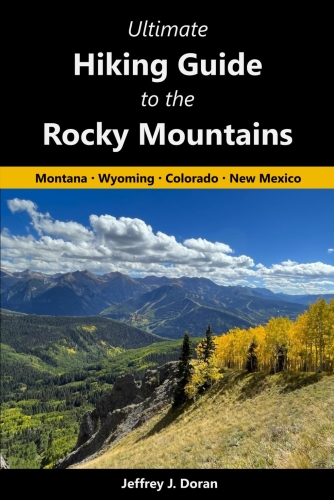
From Montana to New Mexico, the American Rockies stretch for more than a thousand miles. Within this spectacular mountain range are thousands of miles of hiking trails. With such an overwhelming number of options, how will you find and choose the most scenic and rewarding hikes?

Ultimate Hiking Guide to the Rocky Mountains takes all the guesswork out by focusing on some of the most amazing hikes across this range, and provides you with a handpicked list of options that will allow you to make the most of your trips in the Rockies:


Thursday, October 16, 2025

RockyMountainHikingTrails.com Adds 8 New Hikes to Website

RockyMountainHikingTrails.com continues to expand! Kathy and I recently returned from a two-week hiking trip to Crested Butte and the San Juan Mountains near Ouray. As a result, we just added 8 new hikes to our website. By far, Red Mountain Number #3 and Scarp Ridge were the highlights of the trip, in terms of high mountain scenery. However, the hike up to the West Gold Hill Dinosaur Trackway in Ouray was likely the most unique destination we've ever hiked to. In fact, this destination, which visits the longest continuous dinosaur trackway in the world, was just recently protected by the National Forest Service. Moreover, the previous owners of this land didn't know the tracks were made by a dinosaur until 2021! You can find more detail about this hike below.

Here's a quick rundown on what's been added to our site:

Scarp Ridge: As already mentioned, absolute outstanding views await you on this tough but rewarding hike just west of Crested Butte.

Before heading to the higher elevations in and around Crested Butte, both the East River Trail and the Upper Lower Loop are great warm-up hikes. Both offer outstanding scenery, a profusion of wildflowers in the early summer and colorful aspens in the fall.

Red Mountain Number 3: The brilliant red, crimson and vermilion colors of the three “Reds” look like something you might find on Mars. This is a must-do hike when in the Ouray / Silverton area.

The West Gold Hill Dinosaur Trackway: is located just above Ouray. It contains 134 consecutive footprints made by a long-neck sauropod dinosaur that extend for 106 yards.

Mesa Creek Trail: Nice hike to stretch your legs out if driving along Highway 50 through Colorado. It's located on the western end of the Curecanti National Recreation Area.

Lizard Head Overlook: This hike provides a great view of Lizard Head Peak near Telluride - without having to climb Black Face Mountain.

Judd Falls: Another easy hike in the Crested Butte area.

You can find several other hikes throughout Colorado on our Other Colorado Hiking Trails page.
Hope you find these helpful! Happy trails!


              ************************************************************************************

Check out our online trail guides:


Monday, October 6, 2025

Evidence suggests Glacier Park may have been attached to Australia at one point

I just saw this rather interesting article on the Hungry Horse News site:
During a talk last week at Glacier National Park’s Science and History Day, he went over some of the formations in Glacier, which date back to as long as 1.6 billion years ago and said that scientists believe that in one point in time, Glacier was likely connected to Australia, of all places.
You can read the full article here.


              ************************************************************************************

Check out our online trail guides: