
Showing posts with label Flathead River. Show all posts

Wednesday, July 24, 2013

Partnership Announced to Protect Water Supply from Wildfire Risk - Horsethief Reservoir / Flathead River on List

Last week U.S. Department of Agriculture Secretary Vilsack and U.S. Department of the Interior Secretary Sally Jewell announced a federal, local and private partnership that will reduce the risks of wildfire to America’s water supply in western states.

Through the Western Watershed Enhancement Partnership, the U.S. Department of Agriculture (USDA) and the U.S. Department of the Interior (Interior) will work together with local water users to identify and mitigate risks of wildfire to parts of our nation’s water supply, irrigation and hydroelectric facilities. Flows of sediment, debris and ash into streams and rivers after wildfires can damage water quality and often require millions of dollars to repair damage to habitat, reservoirs and facilities.
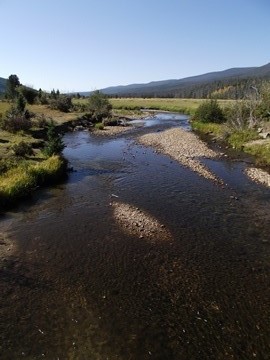
USDA’s Forest Service and Interior’s Bureau of Reclamation will kick off the new partnership through a pilot in the Upper Colorado Headwaters and Big Thompson watershed in Northern Colorado. The partnership will include the Northern Colorado Water Conservancy District and Colorado State Forest Service and builds off of past agreements between the Forest Service and municipal water suppliers, such as Denver Water’s Forest to Faucets partnership.

The Memorandum of Understanding signed on Friday at Horsetooth Reservoir outside of Ft. Collins, Colo., will facilitate activities such as wildfire risk reduction through forest thinning, prescribed fire and other forest health treatments; minimizing post-wildfire erosion and sedimentation; and restoring areas that are currently recovering from past wildfires through tree planting and other habitat improvements.

Horsetooth Reservoir is part of the Colorado-Big Thompson water system which provides water to 860,000 people within eight counties (Boulder, Broomfield, Larimer, Logan, Morgan, Sedgwick, Washington and Weld) and to more than 650,000 acres of agricultural land. It also generates enough electricity to power 58,300 homes annually. The area has experienced several fires in the last few years, including the destructive High Park Fire in June, 2012.

USDA and Interior are working with state and local stakeholders toward formalizing additional partnerships in the following areas:

• Salt River-CC Cragin project in Arizona
• Boise River Reservoir in Idaho
• Mid-Pacific Reclamation Region in California
• Yakima Basin in Washington State
• Horsethief Reservoir/Flathead River in Montana

Nationwide, the National Forest System provides drinking water to more than 60 million Americans. The share of water supply originating on national forest lands is particularly high across much of the West, including the upper Colorado River basin where nearly half of all water comes from National Forests. Healthy forests filter rain and snowmelt, regulate runoff and slow soil erosion – delivering clean water at a far lower cost than it would take to build infrastructure to replace these services.

The goal of the Western Watershed Enhancement Partnership is to restore forest and watershed health and to proactively plan for post-wildfire response actions intended to protect municipal and agricultural water supplies, infrastructures and facilities, water delivery capabilities and hydro-electric power generation. Forest and watershed restoration activities and proactive planning can help minimize sedimentation impacts on reservoirs and other water and hydro-electric infrastructure by reducing soil erosion and the impacts of wildfires, helping water managers avoid costs for dredging, water filtration, and the need to replace damaged infrastructure.


Jeff
Hiking in Glacier.com

Thursday, June 6, 2013

Congressman Daines Introduces Bill to Protect North Fork Watershed

Congressman Steve Daines (R) formally introduced legislation in the U.S. House of Representatives yesterday that would protect the North Fork Watershed, recognizing its importance to Montana’s outdoors heritage and the Flathead Valley’s economy.

“As a fifth generation Montanan and sportsman, I know how special the Treasure State is,” Daines stated. “Efforts to protect the North Fork Watershed, like the North Fork Watershed Protection Act, are a good example of how we can work together to put Montana first. That’s why I’m introducing legislation to protect this valuable resource, while also ensuring that current recreational uses, livestock management, and forest management in this region are maintained. I’m glad to be a part of this important, bi-partisan effort and leading the charge in the House to achieve the goals that the Flathead community supports.”

H.R. 2259, the North Fork Watershed Protection Act of 2013, seeks to protect the North Fork Watershed of the Flathead River by restricting new mineral development from occurring within an area along North Fork.

Daines’ legislation is comparable to legislation previously introduced by Montana Senators Max Baucus and Jon Tester, and is the product of a locally-driven effort by conservationists, the outdoor recreation industry, the timber industry, the oil and gas industry, and others in the business community of the Flathead Valley.

Recognizing that the area along the North Fork is a region where many go to recreate in multiple ways, where there are holders of valid grazing rights, and that is suitable timber for harvesting, Daines included language in H.R. 2259 that makes clear that these presently permissible uses of the land are protected under the bill.

Daines’ support of efforts to protect the North Fork have been noted by local stakeholders as an important step forward in showing much needed bipartisanship leadership in Montana.

“Rep. Daines’ support of the North Fork Watershed Protection Act not only protects our outdoor heritage, it also serves as proof that Montana’s most majestic landscapes provide a common touchstone for us all. America’s Congress can learn from Montana’s leadership – here in the Big Sky country we know how to work together across borders to get important jobs done,” said Michael Jamison, Glacier Program Manager for the National Parks Conservation Association. “The legislation enjoys broad and bipartisan support across the state, costs taxpayers nothing, protects the engines driving our region’s economy, and honors all private property. It transcends both partisan lines and international borders, and with the support of Montana’s entire Congressional delegation we are confident it will be Glacier National Park’s next great success story.”

Baucus and Tester also applauded Daines’ efforts to move this legislation through the House:

“Protecting the North Fork is about protecting Montana tourism and recreation jobs that grow our economy – so this commonsense bill is something everyone can agree on,” said Baucus, who has spent nearly 40 years working to protect the North Fork – beginning with his successful 1975 proposal to designate the Flathead as a Wild and Scenic River. “There’s no place on earth quite like the North Fork, and I look forward to working with Congressman Daines and Senator Tester to make sure our kids and grand kids can enjoy it for generations to come.”

“There are few places on earth like the North Fork when it comes to hunting, fishing, hiking and camping,” Tester said.“Outdoor recreation supports businesses and creates jobs, but Montanans understand that protecting these areas is about more than just dollars and cents. It’s about setting aside places where we can pass on our Montana values to our kids and our grand kids, and I’ll keep fighting to protect areas like the North Fork that make Montana a special place to live and work.”


Jeff
Hiking in Glacier.com

Thursday, February 14, 2013

Comments sought on Flathead River Hybrid Trout Suppression Project

The Montana Fish, Wildlife & Parks (FWP), Region One, is seeking public comment for the Flathead River Hybrid Trout Suppression Project. FWP proposes to continue removing hybrid and rainbow trout from the mouths and channels of Abbot, Sekokini, Rabe, Ivy, and Third Creeks in the main stem and the North Fork of the Flathead River. Trapping and electrofishing would be used to catch fish during their spawning season (April-May) and move them to community fishing ponds. FWP would also electrofish between July and September to remove hybrid and rainbow trout offspring. The goal of the proposed suppression effort is to minimize the loss of westslope cutthroat trout populations in the Flathead River system.

The draft is out for a 30-day public review through March 8, 2013. Please contact FWP Fisheries Biologist Amber Steed, (406) 751-4541 or e-mail to asteed@mt.gov with questions or comments.


Jeff
Hiking in Glacier National Park