Tuesday, April 30, 2024

Man approached bison too closely in Yellowstone National Park and was injured

A 40-year-old male, Clarence Yoder, of Idaho Falls, Idaho, approached a bison too closely (within 25 yards) on the afternoon of April 21, 2024, and was injured by the bison. The incident occurred on the West Entrance Road near the Seven Mile Bridge, located 7 miles east of the park’s West Entrance.

Rangers responded to the area after receiving a report of an individual who harassed a herd of bison and kicked a bison in the leg. They located the suspect's vehicle near the West Entrance and stopped it in the town of West Yellowstone, Montana.

Yoder was arrested and charged with 1) being under the influence of alcohol to a degree that may endanger oneself, 2) disorderly conduct as to create or maintain a hazardous condition, 3) approaching wildlife, and 4) disturbing wildlife. The driver of the vehicle Yoder traveled in, 37-year-old McKenna Bass, of Idaho Falls, Idaho, was also arrested and cited for 1) driving under the influence, 2) interference for failure to yield to emergency light activation, and 3) disturbing wildlife.

Yoder sustained minor injuries from the encounter with the bison. Rangers transported Yoder to a nearby medical facility where he was medically evaluated, treated and released from medical care. He then was transported to the Gallatin County Detention Center.

Yoder and Bass appeared in court on April 22 and pleaded not guilty to the charges. At this point, these are merely allegations, and every defendant is presumed innocent unless and until proven guilty. Each violation can result in fines up to $5,000 and six months in jail.

The incident remains under investigation, and there is no additional information to share.

This is the first reported incident of a visitor being injured by a bison in 2024. The last reported incident occurred on July 17, 2023. There was one reported incident in 2023 and three in 2022.


Jeff
HikinginGlacier.com
TetonHikingTrails.com
RockyMountainHikingTrails.com

Ramble On (2nd edition book on the rich history of hiking)
Exploring Glacier National Park
Exploring Grand Teton National Park

Monday, April 29, 2024

Dr. Lyman B. Sperry: Early Trail Builder

In the heart of Glacier National Park is the 216-acre Sperry Glacier. It's named after Dr. Lyman B. Sperry of Oberlin College, who scouted for "scenic attractions" on behalf of the Great Northern Railway in an effort to expand tourism opportunities in the region. In June of 1895, while exploring the basin above Lake McDonald, Sperry saw and heard multiple avalanches roaring down the mountains that surround what is now known as Avalanche Lake, and agreed with those in his party, "that Avalanche Basin would be a most appropriate name for the place."

On a return trip later that summer, Sperry would discover the glacier that now bears his name. Here's a photo of the Sperry Party on Sperry Glacier:
Several years later, the college professor would oversee construction of a trail that led from the head of Lake McDonald to Sperry Glacier. Dr. Sperry's trail, constructed in 1902 and 1903 with the help of 15 students from the University of Minnesota, was likely the first organized trail-building effort in the future park. Sperry's motivation for building the trail came from the notion that by providing access to the most beautiful parts of Glacier's backcountry, more people would have the opportunity to see the wonders of the area, and thus increase the probability of preserving it as a national park.

Now known as the Gunsight Pass Trail, Dr. Sperry's original trail still leads to the glacier that bears his name, as well as the historic Sperry Chalet. At an elevation of more than 6550 feet, Sperry Chalet sits high atop a rock ledge that offers visitors commanding views of majestic mountain peaks, waterfalls and the Lake McDonald valley. Now listed as an Historic Landmark, the Sperry Chalet dining chalet was built by the Great Northern Railway in 1913, while the original dormitory was completed during the following year. For those visiting Sperry on a day hike, you may want to note that the dining room is open to the public from 11:30 a.m. to 5:00 p.m. each day.

In my book on the history of hiking, I discuss trail development in Glacier in far more detail, including the crucial role the Great Northern Railway played during the early years of the park.

Here's a hiking party on Sperry Glacier in the 1920s:
Here's a photo from the Milwaukee Public Museum with the title, "Crevass in Sperry Glacier into which a lady fell 45 feet but was not serious hurt":
There's a description of a rescue of a woman who fell into a crevasse on Sperry Glacier that was published in Early Days in the Forest Service. The account, written by Frank F. Liebig, the ranger who made the rescue in 1907, doesn't really match the photo in many respects, so I'm not sure if the photo is from the same incident. On the other hand, I couldn't find any other incidents from this period. Either way, his description of the rescue he was involved with is pretty dramatic.


                *******************************************************************************

Virtually no one went hiking before the 19th century. What occurred that inspired ordinary people to take a walk through the woods for pleasure? Ramble On: A History of Hiking explores the rich history of hiking, and how it evolved into one of the most popular pastimes in the world.


Thursday, April 25, 2024

Biologists to begin 2024 grizzly and black bear captures for research purposes in Yellowstone National Park

As part of ongoing grizzly bear and black bear research and management efforts and as required under the Endangered Species Act to monitor the population in the Greater Yellowstone Ecosystem, the U.S. Geological Survey, in conjunction with the National Park Service, is working to inform the public that scientific capture operations are once again about to begin within Yellowstone National Park.

Biologists with the Interagency Grizzly Bear Study Team (IGBST) and Yellowstone National Park will begin field captures on May 1 and continue through Oct. 31. None of the trap sites in the park will be located near established hiking trails or backcountry campsites, and all trap sites will have posted warnings for the closure perimeter. Potential access points will also be posted with bright warning signs for the closure area. It is critical that the public heed these signs. Backcountry users who come upon any of these posted areas need to stay out of the area.

Monitoring of grizzly bear distribution and other activities are vital to ongoing recovery of grizzly bears in the Yellowstone Ecosystem. In order to attract bears, biologists use natural food sources such as fresh road-killed deer and elk. Potential capture sites are baited with these natural foods and if indications are that grizzly bears are in the area, culvert traps or foot snares will be used to capture the bears. Once captured, bears are handled in accordance with strict safety and animal care protocols developed by the IGBST.

Whenever bear capture activities are being conducted for scientific purposes, the area around the site will be posted with bright warning signs to inform the public of the activities occurring. These signs are posted along the major access points to the capture site. It is important that the public heed these signs and do not venture into an area that has been posted.

For more information regarding bear capture efforts, call the IGBST hotline at 406-994-6675. Information about grizzly bear research and monitoring is available from the IGBST website.


Jeff
HikinginGlacier.com
TetonHikingTrails.com
RockyMountainHikingTrails.com

Ramble On (2nd edition book on the rich history of hiking)
Exploring Glacier National Park
Exploring Grand Teton National Park

Tuesday, April 23, 2024

The Legacy of Abner Sprague

"We came here for small ranch operations, but guests and visitors became so numerous, at first wanting eggs, milk, and other provisions, then wanting lodging, and finally demanding full accommodations, that we had to go into the hotel business or go bankrupt from keeping free company!"

    - Abner Sprague
In 1874, just 14 years after Joel Estes settled in what is now Estes Park, Abner Sprague began building a humble homestead in Moraine Park. Almost immediately he began hosting travelers at his cabin, thus establishing the first tourism business within the boundaries of the future national park. The homestead would eventually become a lodge that was used for hunting, fishing, dude ranching, and even golf at one point. By the turn of the century Sprague’s lodge and guest cabins could accommodate up to 100 guests per night. In 1900 (or 1904) the property was sold to James Stead, which remained in business as the Stead’s Ranch and Hotel until 1962.
After selling the lodge the Sprague's moved to Loveland. However, in 1910, seeking "to prevent my homesickness for Estes Park and the mountains from becoming chronic", Abner Sprague and his wife built another guest lodge in the Glacier Basin area. This was located in the current parking area for Sprague Lake. In 1932, the National Park Service purchased the property, but gave the Sprague's a twenty-year operating lease before razing the buildings in 1957.

Abner Sprague would go down in Rocky Mountain National Park history once more when he became the first visitor to pay an entrance fee in 1939.
Today, 12,713-foot Sprague Mountain, Sprague Lake, Sprague Glacier, and Sprague Pass all bear his name. Additionally, Alberta Falls is named for Alberta Sprague, Abner's wife of 55 years.


                *******************************************************************************

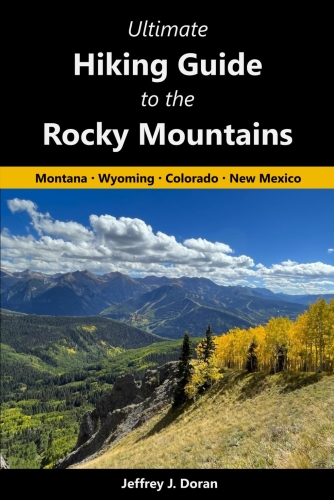
From Montana to New Mexico, the American Rockies stretch for more than a thousand miles. Within this spectacular mountain range are thousands of miles of hiking trails. With such an overwhelming number of options, how will you find and choose the most scenic and rewarding hikes?

Ultimate Hiking Guide to the Rocky Mountains takes all the guesswork out by focusing on some of the most amazing hikes across this range, and provides you with a handpicked list of options that will allow you to make the most of your trips in the Rockies:


Monday, April 22, 2024

Yellowstone National Park 2024 road improvement projects

There will be two major road improvement projects in Yellowstone National Park in 2024. The Lewis River Bridge and Yellowstone River Bridge projects will cause traffic delays. It’s important that visitors plan accordingly for these delays located along the park’s southern and northern road corridors.

1. Lewis River Bridge

Location: Nearly 10 miles north of the South Entrance on the South Entrance Road

Access: In 2024, expect up to 20-minute delays while roads are open to wheeled vehicles (May-Oct. 31). Nearby pullouts and the trail to Lewis River Falls will be closed during construction.

Improvements: This project began in 2022 and will conclude fall 2024. It includes the removal and replacement of the Lewis River Bridge. The existing bridge will be removed, and a new bridge will be constructed immediately downstream. The project includes additional parking and viewing opportunities.

2. Yellowstone River Bridge

Location: Near Tower Junction along the Northeast Entrance Road

Access: In 2024, expect up to 30-minute delays. The Northeast Entrance Road is open year-round to wheeled vehicles. Hiking trails in the area may temporarily close during the duration of the project. Visit the Backcountry Situation Report for details.

Improvements: This project began in 2023 and will conclude fall 2026. It includes the replacement of the structurally deficient Yellowstone River Bridge built in 1961. A new 1,285-foot-long, 175-foot-high steel girder bridge upstream will replace the existing 604-foot-long bridge to preserve year-round access to/from the Northeast Entrance and communities of Silver Gate and Cooke City, Montana. New pullouts, paved parking areas, and dedicated route across the new bridge will increase access to trails, fishing and viewpoints. The Yellowstone River Picnic Area will be enlarged to accommodate increased visitor use.

Temporary delays or closures can happen at any time on park roads. Stay informed.

* Visit Yellowstone’s website at Park Roads.

* Call 307-344-2117 for recorded information.

* Receive Yellowstone road alerts on your mobile phone by texting “82190” to 888-777 (an automatic text reply will confirm receipt and provide instructions).


Jeff
HikinginGlacier.com
TetonHikingTrails.com
RockyMountainHikingTrails.com

Ramble On (2nd edition book on the rich history of hiking)
Exploring Glacier National Park
Exploring Grand Teton National Park