Showing posts with label backpacking. Show all posts

Wednesday, February 25, 2026

The Etymology of Hiking

The meaning of the word “hiking” took a rather long path for it to reach the meaning we understand today.

The following an excerpt from my new book, Ramble On: A History of Hiking:

During the last decade of John Muir’s life, the term “hiking” was just beginning to see usage as a word to describe the act of tramping through the woods. Muir, however, hated the word. Prior to the 20th century, the expression was a pejorative, or was used to describe walking in a vigorous manner, which Muir absolutely despised. To him, it meant to hurry, thus completely missing the point of immersing oneself in nature. In his book, The Mountain Trail and Its Message, published in 1911, Albert Palmer relayed a conversation he once had with Muir:
One day as I was resting in the shade Mr. Muir overtook me on the trail and began to chat in that friendly way in which he delights to talk with everyone he meets. I said to him: "Mr. Muir, someone told me you did not approve of the word 'hike.' Is that so?" His blue eyes flashed, and with his Scotch accent he replied: "I don't like either the word or the thing. People ought to saunter in the mountains - not hike!
Palmer may have provided a definition of what it meant to "hike" at that point. In that same book he asserted that:
There are always some people in the mountains who are known as "hikers." They rush over the trail at high speed and take great delight in being the first to reach camp and in covering the greatest number of miles in the least possible time. They measure the trail in terms of speed and distance.
Perhaps that was an accurate description. On the other hand, it’s possible he may have conveyed a meaning that was already in the process of becoming outdated.

Over the years, many terms have been used to describe the act of walking in nature, such as hiking, rambling, sauntering, tramping, wandering, strolling, ambling, roaming, traipsing, marching and trekking. The first English term to describe this act was likely “rambling.” The word originally meant to wander, or roam aimlessly, but eventually evolved to describe hiking. The expression was widely used in England through the 19th century. It was also used in America for awhile, though much less frequently. While rambling is still occasionally used in the United Kingdom, it’s now mostly viewed as an old fashion term. Walking, hillwalking, fellwalking, and even hiking are more commonly used. Fellwalking, a word used to describe hiking in the mountains, comes from the English word fell or fjall, which is an Old Norse term that means mountain. In Victorian England, during the mid-1800s, wandering vagrants were derogatively known as tramps, a word that would eventually refer to hikers, and is now used by New Zealanders to describe backpacking. While tramping was widely used in America to describe hiking in the late 1800s and early 1900s, both John Muir and Henry David Thoreau were fond of using the term saunter.
Webster's Ninth New Collegiate Dictionary, published in 1985, indicates that use of the word "hike" dates back to at least 1809; however, it had a different connotation at that time. It was originally meant "to move, pull or raise with a sudden motion" or “to travel by any means.” The dictionary indicates that by 1865 the word had adopted a new meaning, which they defined as "a long walk esp. for pleasure or exercise." Etymonline.com claims that “hike” comes from the English term “hyke,” which meant "to walk vigorously." The website notes that this word also dates back to 1809. They also quote a definition of the term from the 1830 edition of the Vocabulary of East Anglia: "to go away. It is generally used in a contemptuous sense Ex. 'Come, hike,' i.e. take yourself off; begone." Slang and Its Analogues Past and Present, published in 1893, defined the oldest meaning of the word as, “To move about. Also to carry off; to arrest.” A newer definition, from 1811, was updated to mean, “To hike off; to run away.” The slang dictionary then provided an example of a more contemporary use of the term, citing a quotation from the February 2, 1884, edition of the Daily Telegraph: “We three, not having any regler [sic] homes nor a steady job of work to stick to, HIKE ABOUT for a living, and we live in the cellar of a empty house.”

It appears the meaning of the word “hike” began to evolve during the Philippine-American War. This conflict began shortly after the conclusion of the brief Spanish-American War in 1898, which involved Cuba, Puerto Rico, Guam, and the Philippines. Just weeks after the Spanish were expelled from the Philippines, fighting broke out between U.S. soldiers and Filipino nationalists. An article with the title, “The Vocabulary of the Philippines,” published in the August 19, 1899, edition of The Criterion, a weekly New York-based literary magazine, began with this highly illuminating passage:
Now that the volunteers are returning from the Philippines there is trouble ahead for the dictionary makers. It is a peculiarity of American slang that it is at once so concise, picturesque, and graphic that most new words of this kind eventually force their way, despite dissent, into the lexicon. The volunteers will bring back with them so many brand new expressions of this character that their vocabulary may prove all but incomprehensible. For the convenience of people who have not had the advantage of recent Philippine travel, and also for the future reference of our lexicographers, a short glossary, with comments, may be valuable.

One of the words most commonly used in this new dialect is “hike.” Its derivation is doubtful, but its descriptive power great and swift. “To hike” means to travel with amazing speed. It is generally used to give some idea of how fast the Filipinos can run when defeated in battle. Incidentally, “hiking” is a term applied to the speed which American soldiers are obliged to develop when trying to catch the fleeing Filipino. So, in a more general way, “hiking” is applied to any swift and fatiguing travel, while a “hiker” is obviously a man of hustling and enduring powers.
A review of several military-related publications from this era corroborates these definitions. Moreover, a comment in the March 2, 1901, edition of the Army and Navy Journal confirms that the terms were new to the broader civilian population in America: “Some time ago we referred to ‘hike’ and other expressive words which our boys in the field have added to our vocabulary.” It appears that soldiers used the term “hiking” to distinguish their mode of travel in this foreign land from traditional marching. As the fighting escalated, the Filipinos began engaging U.S. troops in guerrilla-style warfare. As a result, U.S. soldiers were often forced to bushwhack through dense jungles, grasslands, swamps and rice paddy fields. There are also several references to “hiking” along rugged mountain trails. What’s important to note is that both “hike” and “hiking” were scarcely used before the war, but quickly became part of the American lexicon in the years that immediately followed. Within a decade or so, the terms basically took on the meaning that we understand today. You can see how the definition evolved over a very short period of time. The 1903 edition of Supplement To A Standard Dictionary Of The English Language defined “Hike” as “The act of hiking; a weary journey on foot.” The 1911 edition of Webster’s New International Dictionary defined “hike” as the “Act of hiking; a tramp; march.” More importantly, within a few years of the conclusion of the war, references to hiking began to appear in several outdoor publications for the first time. The words “hike” and “hiker” were first used in the Sierra Bulletin, the journal of the Sierra Club, in 1905. The following passage from this edition obviously reflects the sentiment of John Muir:
There is the aristocrat of leg and lung, the “hiker,” so called, who walks up perpendicular cliffs like a fly, never misses the trail, and always reaches camp first. He is harmless, but is not generally loved, for he is a little overbearing and given to much talking of a certain catalogue of hours and distances which he keeps in his mind and calls his record.
We see additional uses of the three hiking-related expressions in subsequent issues of the Sierra Bulletin. Other examples of early usage of the terms include an article about “A Sierra Club Hike” in the August 6, 1909, edition of The California Weekly. One of the earliest uses of the phrase “hiking boots” appeared in an advertisement in the 1912 edition of The Mountaineer, the journal of The Mountaineers club out of Seattle. The October 1911 edition of The American Boy, the October 1912 edition of Boys Life, and The Boy Scout’s Hike Book from 1913 are all sprinkled with several references to hiking. Prior to 1910, most hiking clubs used the word "mountain" or "alpine" in their name. However, in that year, the Wanderlusters Hiking Club out of Washington D.C. became the first organization to use "hiking" in a club name.
The word “hiking” appears to have been adopted along the West Coast first, where it began to evolve into the meaning we understand today. The term and its related expressions were most likely introduced by veterans returning from the war in the Philippines. Indeed, the majority of troops returning from the Philippines passed through San Francisco, not far from the Sierra Club’s original headquarters. It’s fairly easy to speculate that the terms were likely introduced to the local population, and then members of the hiking community began borrowing them to describe the types of excursions they were taking in the nearby mountains. From the West Coast, the expressions spread across the rest of the country, which may have been the result of West Coast clubs sharing articles and correspondence with other clubs.

As the 20th century progressed, the expressions Thoreau and Muir preferred to use have mostly faded from the American lexicon. Nearly everyone in North America now uses the word “hiking.”


                *******************************************************************************

Virtually no one went hiking before the 19th century. What occurred that inspired ordinary people to take a walk through the woods for pleasure? Ramble On: A History of Hiking explores the rich history of hiking, and how it evolved into one of the most popular pastimes in the world. This new edition on the history of hiking is now available on Amazon.


Thursday, February 19, 2026

Key Milestones in the History of Hiking

The following timeline of key dates in the history of hiking was adapted from my new book, Ramble On: A History of Hiking:

Over the last several decades, the sport of hiking has become one of the most popular outdoor activities in the world. According to the latest National Survey on Recreation and the Environment, 33.9% of all Americans above the age of 15 participated in hiking during the period between 2005 and 2009. Amazingly, there are several other countries that have far higher participation rates than the United States. This trend, however, leads to the burning question; when did people begin taking to the trail for pleasure? Since the dawn of mankind, humans have walked the earth to hunt, forage for wild edibles, explore, trade goods with neighboring communities, and migrate to other regions. At some point in our long evolution we realized that we didn’t need a utilitarian reason to walk. Somewhere along the line we discovered the joy of traipsing through the countryside, observing the beauty of a wildflower, watching wildlife in their natural habitat, marveling at the roar of a waterfall, or contemplating the scenic grandeur from the top of a mountain. Is this a fairly recent phenomenon, or is this an innate characteristic of human beings? No matter the answer to that question, the following are the key milestones in the history of hiking that has led to its immense popularity today:

~3300 BCE: In 1991, two German tourists discovered the mummified remains of “Otzi the Iceman” in the Ă–tztal Alps along the Austrian–Italian border. Although scientists aren’t entirely sure what this late-Neolithic man was doing at an elevation hovering just over 10,500 feet, there are some who have speculated that he may have been an early mountaineer. More importantly, however, the remnants of the rucksack (or backpack) that he carried on his back is the oldest rucksack ever found.

125: The 2nd century Roman Emperor, Hadrian, hiked to the summit of Mt. Etna on Sicily to see the sunrise, making this the earliest recorded hike for pleasure.

1642: Darby Field makes the first recorded ascent of Mt. Washington in New Hampshire, which would become the focus of one of the first tourist destinations in the United States in the early 1800s.

1760: The Industrial Revolution begins in Great Britain, and is generally recognized as lasting until the start of World War I. The Industrial Revolution gave rise to the labor movement, automobiles, environmentalism, club culture, and even art. As a result, it's arguably the single most important event to spur the development of hiking and walking for pleasure.

1778: Thomas West, an English priest, publishes A Guide to the Lakes, a detailed account of the scenery and landscape of the Lake District in northwestern England. The guide helped to popularize the idea of walking for pleasure, and is credited as being one of the first travel guides.

1786: The modern era of mountaineering is marked by the first ascent of 15,771-foot Mont Blanc in France, the tallest peak in the Alps.

1799: Williams College (of Massachusetts) President Ebenezer Fitch ascends Mt. Greylock with two other companions.

1819: Abel Crawford, along with his son Ethan, blaze an 8.25-mile trail to the summit of Mt. Washington in New Hampshire. The path is recognized as the oldest continually used hiking trail in the United States, and is likely the first footpath in the entire world to be built specifically for recreational hiking.

1830: A crew of 100 students and professors from Williams College blaze the Hopper Trail to the summit of Mt. Greylock. Later that same year, students constructed a 37-foot wooden tower atop the mountain. This tower, and its replacement, were maintained into the 1850s, and were used for sightseeing and scientific observations.

1850: The Exploring Circle is founded by Cyrus M. Tracey and three other men from Lynn, Massachusetts. The National Park Service recognizes the club as being “the first hiking club in New England," thus, in all likelihood, making it the first hiking club in the world.

1854: The beginning of the systematic sport of modern mountaineering as we essentially know it today is marked by the ascent of the Wetterhorn in the Swiss Alps by Sir Alfred Wills. His book, Wanderings Among the High Alps, published two years later, helped make mountaineering fashionable in Britain, and ushered in the systematic exploration of the Alps by British mountaineers. These events also marked the beginning of the so-called “Golden Age of Alpinism.”

1857: The world's first mountaineering club, the Alpine Club, was founded in London.

1863: Professor Albert Hopkins of Williams College founds the Alpine Club of Williamstown, whose stated mission was “to explore the interesting places in the vicinity, to become acquainted, to some extent at least, with the natural history of the localities, and also to improve the pedestrian powers of the members”. It was the first hiking club to accept women as members, which likely provided an important template for future hiking clubs in America.

1867: John Muir begins a 1000-mile walk from Indiana to Florida, which was recounted in his book, A Thousand-Mile Walk to the Gulf. The trek launched a lifetime career of hiking and wilderness advocacy. His conservation efforts, articles and books would help to establish several national parks during and after his lifetime.

1872: Yellowstone becomes the world’s first national park after legislation is signed by President U.S. Grant.

1876: The Appalachian Mountain Club, America’s oldest recreational organization, is founded to explore and protect the trails and mountains of New England.

1876: Newtown, England entrepreneur Pryce Pryce-Jones designs the "Euklisia Rug", considered by many to be the forerunner of the modern sleeping bag. The rug included a wool blanket with a pocket at the top for a sewn-in, inflatable, rubber pillow. Once inside, the camper (or soldier) folded the blanket over and fastened it together, thus keeping themselves “snug in a rug”.

1879: One of the first hiking clubs in England, the "Sunday Tramps," was founded by Leslie White. These early “rambling” (the English word for hiking or walking) clubs sprang up in the northern areas of England as part of a campaign for the legal "right to roam," a response to the fact that much of the land in England was privately owned.

1882: William Pickering publishes Walking Guide to the Mt. Washington Range, which is arguably the first modern trail guide to be published America.

1887: The first external frame rucksack is patented by Colonel Henry C. Merriam.

1922: Australian climber George Finch designs and wears a knee-length eiderdown parka during the 1922 British Everest Expedition. The shell of the coat was made from the waterproofed-cotton fabric of a hot-air balloon, which was filled with duck down. During the expedition, Finch and climbing partner Geoffrey Bruce reached a height of 27,300 feet during their summit attempt, which set the record for the highest altitude attained by any human up to that point.

1922: Lloyd F. Nelson submits his application to the U.S. Patent Office for his "Trapper Nelson's Indian Pack Board," which is acknowledged to be the first commercially successful external-frame backpack to be sold in the U.S. The "Trapper Nelson" featured a wooden "pack board" as its frame. Attached to the frame was a canvas sack that contained the hiker's gear, which rested on the hiker's body by two canvas shoulder-straps. Prior to his invention most hikers used a rucksack, which was essentially a loose sack with shoulder straps.

1930: The Green Mountain Club completes construction of the Long Trail, making it the first long-distance hiking trail in the United States.

1937: Italian climber and mountaineering guide, Vitale Bramani, invents "Carrarmato," which tranlates to “tank tread" in English. This new rubber lug pattern provides mountaineering boots with outstanding traction, and allows them to be used on a variety of surfaces. The product is launched under the brand name "Vibram".

1937: America's first “grand” trail, the Appalachian Trail, was completed in August of 1937. A forester by the name of Benton MacKaye conceived the idea in 1921.

1948: Earl Shaffer becomes the first person to thru-hike the entire Appalachian Trail.

1967: Climber Greg Lowe invents the internal frame backpack. The “Expedition Pack” also featured the first adjustable back system, first side compressors, first sternum strap and the first load stabilizers.

1968: The National Trails System Act is passed by Congress, resulting in thousands of miles of trails being designated as National Scenic Trails, National Historic Trails and National Recreation Trails.

1969: Bob Gore accidentally stretches a heated rod of polytetrafluoroethylene by almost 800%, which forms a microporous structure that was roughly 70% air. The discovery was introduced to the public under the trademark of "Gore-Tex," which became the first breathable, waterproof, and windproof fabric.

1992: Ray Jardine introduces the concept of ultralight backpacking with the release of his book, The Pacific Crest Trail Hiker's Handbook. During his first PCT thru-hike Jardine’s pack weighed just 25 pounds. By his third hike it weighed less than 9 pounds. “Ray’s Way” of thinking has led to several innovations that have benefitted both backpackers and hikers.

This timeline is only a brief overview of the people, events, inventions and social trends that have helped to shape the sport of hiking as we know it today. If you enjoyed this post, please check out my new book on the history of hiking, which provides a much more in-depth narrative on the rich and compelling history of hiking.


                *******************************************************************************

Virtually no one went hiking before the 19th century. What occurred that inspired ordinary people to take a walk through the woods for pleasure? Ramble On: A History of Hiking explores the rich history of hiking, and how it evolved into one of the most popular pastimes in the world.


Wednesday, May 22, 2024

Study: More than half of all campers abandoned a reservation in 2023

According to a recent study, only 42.7% of campers reported using all of their reservations in 2023. In other words, more than half of the campers in this study booked a campsite that they ended up not using, thus likely leaving it unavailable for someone else to possibly use. In conjunction with this bloated statistic, 45.5% of all campers reported having difficulty in booking a site because campgrounds were completely sold out.

Earlier this year The Dyrt, the No. 1 app for camping availability, photos and reviews, published the results of its 2024 Camping Report. Published in conjunction with Toyota, the organization claims this is the most in-depth and comprehensive look at the camping industry to date. The Dyrt receives more than 30 million visits from campers each year, and has more than 12 million user-generated reviews, photos and tips for every RV site, cabin, glamping and tent camping location, including all public, private and free camping areas in the United States.
The 2024 Camping Report was compiled from the results of surveys conducted among three groups: 7000 members of The Dyrt camper community, a representative sample of 1000 U.S. residents, and camping property managers across all 50 states.

Here are a few key takeaways from the survey:

* An estimated 84.8 million Americans went camping in 2023. 5.5 million (6.5%) of those were first-time campers.

* Tent camping was the primary style of camping for 31.4% of all respondents, with the rest being primarily RV, Truck and Camper Van campers.

* More than 57% of campers reported cancelling at least one reservation in 2023. Among this group, 87.2% said they cancelled a reservation more than 48 hours prior to the date. 32.2% cancelled at least one reservation less than 48 hours from their date, while 14.9% were simply no-shows at least once in the prior year. According to the data, Millenials and Gen-Xers were much more likely to "ghost," or not show up for their reservation.

* 45.5% of all campers reported difficulty in booking a site due to campgrounds being sold out. This number is four times higher than what was reported in 2019.

* 23.4% of all campers reported arriving at a first-come, first-served campground that was full. This is double the percentage from 2019.

Clearly, this is an unsustainable model for all those involved. The survey doesn't reflect the question, but I would be curious to know how often backcountry campsite reservations in national parks are being abandoned at the last minute. My guess is that this is likely happening with timed-entry reservations to enter national parks as well. People are likely over-booking camgsites and park entry systems, for a variety of reasons, with the end result of denying access to others. Perhaps campgrounds will be forced to make more of the their sites available on a first-come, first-served basis. Camgrounds may also be forced to require a non-refundable deposit for reservations cancelled before a certain time period.

A few other trends of note:

* One-third of all campers reported camping in the winter. This represents a 40% increase since the start of the pandemic.

* 28.9% of all campers reported working during their trip.

* Camping alone is on the rise, with 29.8% of all respondents reporting that they went camping by themselves in 2023.


                *******************************************************************************

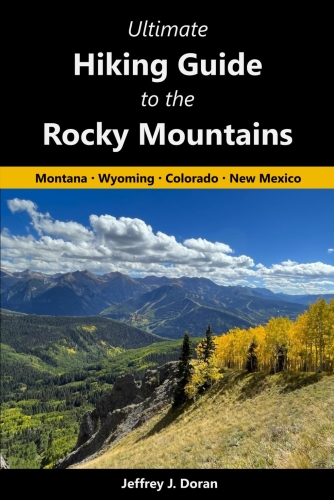
From Montana to New Mexico, the American Rockies stretch for more than a thousand miles. Within this spectacular mountain range are thousands of miles of hiking trails. With such an overwhelming number of options, how will you find and choose the most scenic and rewarding hikes?

Ultimate Hiking Guide to the Rocky Mountains takes all the guesswork out by focusing on some of the most amazing hikes across this range, and provides you with a handpicked list of options that will allow you to make the most of your trips in the Rockies:


Saturday, February 21, 2015

The Teton Crest Trail Uncut

Is anyone else ready for hiking season? I know I am, but it looks like we may have at least a few more weeks of snow, cold and overcast skies. If you haven't decided where you're going to hike this summer, perhaps this video will provide some inspiration. In 2011 Dan McCoy hiked the Teton Crest Trail in the Grand Tetons, and came back with this wonderful video that highlights some of the incredibly beautiful scenery he saw along the way. His four-day, 42-mile route took him from the Rendezvous Mountain Aerial Tram to Marion Lake, across the Death Canyon Shelf to the Alaska Basin, over to Lake Solitude, and then after climbing Paintbrush Divide, he returned to civilization via the Paintbrush Canyon Trail.

This video clearly underscores why the Teton Crest Trail is one of the premier backpacking routes in America. For those that don't backpack, there are fortunately a handful of segments can be reach by day hikes, which are linked to in the above paragraph. Enjoy:


Jeff
HikinginGlacier.com
TetonHikingTrails.com
RockyMountainHikingTrails.com
HikingintheSmokys.com

Friday, July 25, 2014

Outdoor Recreation Participation Report: Camping and Backpacking Continues to Decline

The Outdoor Foundation is reporting that a record number of Americans participated in at least one outdoor activity in 2013, with nearly 50% of all Americans ages six and older taking part in at least one of the 43 outdoor activities, according to the latest Outdoor Recreation Participation Report. That percentage equates to 142.6 million American outdoor participants. Although the number of participants rose, the percentage of participants fell slightly from 49.4% in 2012 to 49.2% in 2013, due to population increase.

Compared to 2012, participation in outdoor activities increased or remained flat among youth and young adults - signaling a positive trend in America's inactivity crisis. The participation rate among children ages six to 12 rose one percentage point to 64%. Participation among young adults ages 18 to 24 also rose one point to 58%, while hard-to-reach adolescents, ages 13 to 17, remained flat at 60%.

Below are a few stats of interest:

* Participation in day hiking remained relatively flat again for the second year in a row. However, the latest figures don't reflect the strong growth in the outdoor pursuit in recent years. Compared to 2006 (the first year of the study), hiking is up 15.1%. Compared to 2010, participation in hiking has increased by 5.8%.

* Though backpacking has seen an increase in the number of participants over each of the last 2 years, the average number of outings per backpacker has dropped off sharply. As a result, backpacking has dropped out of the top 5 favorite outdoor activities for adults (ages 25+), based on the frequency of activity.

* Camping (within a 1/4 mile of a vehicle or home) continues to decline: down 11% when compared to 2011, and down almost 18% since 2006.

* Participation in adventure racing and triathlons saw the largest increases over the past three years. Adventure racing increased by 28%, while off-road triathlons increased by 25% and road triathlons increased by 10%.

In 2013, the top 5 most popular outdoor activities for adults (ages 25+), based on participation rates were:

1. Running, Jogging and Trail Running - 16.2% of adults
2. Fishing - 14.8% of adults
3. Bicycling (Road, Mountain and BMX) - 13.1% of adults
4. Hiking - 11.4% of adults
5. Camping (Car, Backyard and RV) - 10.6% of adults

The top 5 favorite outdoor activities for adults (ages 25+), based on frequency of activity were:

1. Running, Jogging and Trail Running - 81.4 average outings per runner
2. Bicycling (Road, Mountain and BMX) - 51.7 average outings per cyclist
3. Birdwatching - 37.7 average outings per birdwatcher
4. Wildlife Viewing - 25.2 average outings per viewer
5. Hunting - 24.2 average outings per hunter

The report is based on online and household surveys of more than 19,000 Americans ages six and older, and covers 43 different outdoor activities, making it the largest survey of its kind. To download a complete copy of the 2014 Outdoor Recreation Topline Participation Report, visit The Outdoor Foundation website.


Jeff
Hiking in Glacier National Park

Tuesday, November 19, 2013

Grand Teton to Update its Cost Recovery Rates for Backcountry & Special Park Use Permits

Grand Teton National Park will soon update its cost-recovery rate for backcountry camping permits and for special park use permits to reflect the actual cost of operation for these programs. Adjusted charges for these specific permits will become effective beginning January 1, 2014.

Through a recent cost-recovery evaluation, Grand Teton conducted a comprehensive review of the financial aspects of its backcountry camping and special park use permit systems and determined that the park has not recovered the actual costs of operation for several years. The annual revenue under the current permits systems does not fully cover the operational costs of managing these programs. Cost-recovery includes all expenses incurred to process a permit application, monitor a permitted activity, and perform site restoration, when necessary.

In addition, Grand Teton will use an online process for making backcountry camping reservations through Recreation.gov, managed by Reserve America. Transition to Recreation.gov will allow users to plan their trip and receive immediate confirmation, and better facilitate management of the park's backcountry reservations. Advanced reservation requests will be accepted from January 8 through May 15, and updated cost-recovery rates for all backcountry camping permits will be $25, with an additional $10 fee for advanced reservations.

The park's charges for special use permits have not been updated since 2002. Increased oversight and management of special use permits—combined with an increase in the number of applications reviewed and permits issued—resulted in the need to conduct a cost-recovery evaluation of this rate structure as well. Approximately 250–300 special park use applications are received annually, all of which require review. Applications for permits include weddings, commercial filming, special events, scattering of ashes and First Amendment requests; and most of the applications result in the issuance of a permit, and the need for monitoring of the permitted activity.

The adjusted special park use charges for 2014 are: $100 for weddings, $175 for events, $275 for commercial filming less than 6 months, $325 for commercial filming 6–12 months, and no charge for scattering ashes or First Amendment requests.

Application fees cover the costs incurred for processing the permit, as well as for permit review to ensure the information supplied is sufficient to form a decision for issuance. It is a one-time, non-refundable amount submitted by the applicant with his/her completed application. If the application is approved, the permitee may be responsible for additional cost-recovery charges associated with monitoring the activity and for site restoration, if necessary.

In the future, all cost-recovery charges may be re-evaluated annually and adjusted, when necessary.


Jeff
Hiking in Glacier National Park

Wednesday, August 28, 2013

Backpacking the Teton Crest Trail in the Grand Tetons

The Teton Crest Trail in the Grand Tetons is truly one of the epic hikes in America. In this video, backpacker Dan Mccoy did an excellent job of capturing the majestic beauty of the Grand Tetons during his four-day backpacking trip in 2011:


Jeff
Hiking in Glacier.com

Thursday, July 18, 2013

Summer Backcountry Camping - Part 2

Yesterday we published a video by Glacier National Park that offered advice to hikers and backpackers with regards to wildlife encounters while out on the trail or in camp. Part 2 of this two-part series discusses weather conditions and camping etiquette:


For more information on camping in Glacier, please click here.


Jeff
Hiking in Glacier.com

Wednesday, July 17, 2013

Summer Backcountry Camping - Part 1

With camping season in full gear right now, I thought I would post a video published by Glacier National Park from a few years ago. This short video offers some sound expert advice for hikers and backpackers who venture into the backcountry, especially in grizzly bear country:


Tomorrow we'll post part 2 from the the two-part series. For more information on camping in Glacier, please click here.

For more information on recreating in bear country, please click here.


Jeff
Hiking in Glacier.com

Sunday, April 21, 2013

Near record backcountry camping permit applications submitted this year

This past Monday was the final day that backpackers could submit a permit application, in order to be eligible for the advanced reservation request lottery. In a blog posting on the Glacier National Park website, ranger Mark Wilson states:
We have received approximately 1600 permit applications this year, which puts us on par with our busiest summer 2010, our Centennial year.
He also mentions that hikers should expect winter conditions in the high country along the passes until late July or early August, while backcountry campgrounds are likely to open on schedule. However, as Mark mentions, the weather between now and then can always change those time estimates.

If you've entered a permit application into the lottery, you may want to read his posting to find out what you can expect, and what the next steps are in the process.

So, if you think your having a stressful day on the job, this is what it looks like right now in Glacier's backcountry permit office:


Jeff
Hiking in Glacier National Park

Tuesday, March 19, 2013

Deadline looms for advanced backcountry campground reservations in Glacier

Are you planning a backpacking trip in Glacier National Park this summer? If so, and you wish to secure the campsites on your preferred route, you should be aware that in order to be eligible for the advanced reservation request lottery, the deadline is April 15th.

Advance reservation applications for backcountry campsites are currently being accepted for trips that begin June 15th through October 31st.

All advanced reservation requests received from January 1 through April 15, 2013 will be eligible for the advanced reservation request lottery. The lottery processing begins on April 16th. Each reservation application will be designated a randomly generated number and will be processed in that order. The park warns that it can take up to a month to process all the advance reservation requests received in the lottery. Requests received after April 15th will be processed in the order of receipt, and after the initial advanced reservation requests are processed.

You should note that applications will be accepted on the official form only. There's also a nonrefundable processing fee of $30 that must be submitted with each application. For more information you can visit Glacier's Backcountry Camping Guide.


Jeff
Glacier National Park Hiking

Thursday, September 13, 2012

Exploring the Bob Marshall Wilderness Complex

Just south of Glacier National Park, across U.S. Highway 2, is the Bob Marshall Wilderness Complex. This massive expanse extends for 60 miles along the Continental Divide within the Flathead, Lolo, Helena, and Lewis and Clark National Forests, and includes the Great Bear, Scapegoat and the Bob Marshall Wilderness areas. The complex, encompassing more than 1.5 million acres, forms the third largest wilderness area in the lower 48.

By far the largest of the three wilderness areas in the complex is the Bob Marshall, also known as the “Bob”, which includes more than 1 million acres, and is considered to be one of the most completely preserved mountain ecosystems in the world. Counting more than 700 wilderness areas in the National Wilderness Preservation System, the Bob is the 19th largest wilderness in the United States, and the 5th largest in the lower 48.

The preserve is named after Robert "Bob" Marshall, a forester, conservationist, writer, wilderness activist, and one of the principal founders of The Wilderness Society. As the head of recreation management in the Forest Service in late 1930s, Marshall was the first to suggest a formal, national organization of individuals dedicated to the protection of primeval land. Twenty-five years after his death, Congress passed the Wilderness Act of 1964 which protected nine million acres of federal land from development. As part of this key legislation the Bob was among the original wilderness areas set aside for preservation.

In addition to the “Bob”, Mt. Marshall in the Adirondacks is also named in his honor.

The Bob is home to moose, elk, black bear, mountain goats, bighorn sheep, wolverines, mountain lions, lynx, gray wolves, bald eagles, osprey, pelicans and trumpeter swans. It’s also prime grizzly bear habitat, and has the highest population density of the species found anywhere in the United States outside of Alaska. As of 2010 it’s estimated that roughly 940 grizzlies live within the Northern Continental Divide Ecosystem, which includes the Bob Marshall Wilderness Complex, Glacier National Park and the surrounding forests.

Elevations in the complex range as low as 4000 feet, to 9411 feet at the summit of Red Mountain in the Lewis and Clark Range. Perhaps one the most impressive feature of the wilderness, at least from a geological standpoint, is the long limestone escarpment known as the Chinese Wall. Part of the Continental Divide, the wall extends for 22 miles, and has an average height of more than 1000 feet. From the Haystack Mountain area west of the Divide the view of the escarpment is virtually unbroken for almost 20 miles.

Due to its geography, pacific maritime weather provides ample moisture, resulting in lush, dense forests on the west side of the Continental Divide. However, the eastern side of the Divide has a much drier climate, and is much more characterized by open country.

In addition to its rugged peaks, deep canyons, alpine lakes, cascading waterfalls, grassy meadows, towering forest of ponderosa pine, Douglas fir, larch, aspen and spruce, the Bob is also home to big river valleys, including the headwaters of the South Fork Flathead River.


Hiking in the Bob Marshall Wilderness Complex:

As you may have already guessed, the Bob Marshall Wilderness Complex is a hiker paradise. In fact, its home to more than 1700 miles of trails, and offers numerous recreational opportunities for day hikers, backpackers, horseback riders and cross-country skiers. Some of the more popular day hikes can be found in the Sawtooth Range near Choteau, Marion Lake near Essex, Stanton Lake near Hungry Horse, Jewel Basin near Big Fork, and Holland Lake near Condon, Montana.

Although there are no paved roads that bisect the interior of the Bob, the wilderness can be accessed by roads surrounding the complex. To the north is U.S. Highway 2; to the east are U.S. Highways 89 and 287; Montana Highway 200 to the south; and Montana Highway 83 to the west.


Additional Information:

* The Bob Marshall Wilderness Foundation

* Flathead National Forest

* Flathead National Forest Trails

* Lolo National Forest Trails

* Lewis and Clark NF Trails

* Hiking Montana's Bob Marshall Wilderness – by Erik Molvar

* Bob Marshall Wilderness Complex Map (Northern Half)

* Bob Marshall Wilderness Complex Map (Southern Half)


Jeff
HikinginGlacier.com
TetonHikingTrails.com
RockyMountainHikingTrails.com

Ramble On (2nd edition book on the rich history of hiking)
Exploring Glacier National Park
Exploring Grand Teton National Park

Wednesday, September 12, 2012

Backpacking Trip Over Gunsight Pass

Thanks to Mike and Kristan for this pretty cool video of their twenty-plus mile journey across the heart of Glacier National Park in August of 2009. Their five-day trek took them from the Gunsight Pass Trailhead to Gunsight Lake, up the Jackson Glacier Trail, over Gunsight Pass to Lake Ellen Wilson, to the Sperry Campground before exiting at the Lake McDonald Lodge:


Jeff
Hiking Glacier National Park

Saturday, August 4, 2012

Should we be concerned about the decline in backpacking?

The other day I stumbled upon a posting in a blog called Early Warning, which lamented the decline of backpacking. In the posting the author, Stuart Staniford, created a graph of "Back Country Overnights" using data from the National Park Service (from 1979 to 2011). Staniford states that this data "seems likely to be a decent proxy for overall backpacking levels". Here's a look at his graph:

Staniford makes an interesting observation about the data:

"backpacking is a very cheap way to vacation, and it appears that there is something of a tendency for it to increase during and following recessions (grey boxes), and decline during booms."

However, it was Staniford's conclusion that caught my attention: "Whatever the cause, it's a worrying trend for those of us who care about the natural world".

My first problem with the analysis was that he was using data only from the National Park Service, which only covers National Park units, but doesn't include Wilderness Areas, National Forests, National Monuments, BLM lands, State Parks, and other forested areas. My thought was that this slice of data was too narrow to get a true representative picture of backpacking. So I turned to the Outdoor Industry Association (OIA) which publishes the Outdoor Recreation Participation Study on an annual basis. The study looks at participation rates among a variety of outdoor pursuits. Unfortunately the study only goes back to 2006. Moreover, the trends for that time period are very similar to what the NPS is reporting.

According to the latest Outdoor Recreation Participation Study, participation in backpacking was virtually flat when comparing 2011 to 2006. Camping in general fell roughly 7.6% during that same time period.

However, I don't think Mr. Staniford has much to worry about in terms of people enjoying the great outdoors. Participation in day hiking has jumped 15.5% over the last 5 years. Moreover, there are almost 5 times as many people that report participation in hiking as compared to backpacking. All this bodes extremely well for those of us that wish to see continuing support for our wilderness areas.

The latest OIA report also shows that participation in canoeing has increased 6.9% between 2006 and 2011. Trail running increased by 23%, mountaineering increased by 2%, rafting increased by 5.9%, and recreational kayaking actually doubled in that same time frame.

Maybe the takeaway from all this data is that people are enjoying the outdoors more, and are enjoying it in a broader array of recreational pursuits, but prefer the creature comforts of civilization at the end of the day.

To read the entire Early Warning posting, please click here.


Jeff
Glacier National Park Trails

Tuesday, April 24, 2012

Participation in Outdoor Recreation Reaches Highest Level in Five Years

In 2011, more Americans participated in outdoor recreation activities than in the past five years – perhaps signaling a move toward healthier, active lifestyles. More than 141 million Americans, or 49.4 percent of the U.S. population, participated in outdoor activities last year – reflecting an increase of three million people compared to 2010 and continuing a five-year trend. In addition, Americans made a total of 11.6 billion outdoor outings in 2011, which is 1.5 billion more than the previous year. Annually, participants averaged 82 outdoor outings – from hiking to biking, skiing to paddling. The findings are part of the 2012 Outdoor Recreation Participation Topline Report, the leading report tracking outdoor participation trends in United States published by The Outdoor Foundation.

The research shows increases in youth and young adult participation – continuing an encouraging, yet modest, trend over the last few years. The study found that outdoor participation increased by one-percentage in every age bracket, 6 to 12, 13 to 17 and 18 to 24 respectively. This accounted for more than four billion outdoor outings for the younger generation with an annual average of nearly 90 outdoor outings. While encouraging, these rates are significantly lower than those recorded in 2006. For example, 63 percent of youth ages 6 to 12 participated in outdoor recreation in 2011, compared to 78% in 2006.

The most popular activities among young people, in terms of overall participation, continued to be running, biking, camping (20.6%), fishing and hiking (12.9%). Skateboarding, triathlons and bird-watching were among their top five favorite activities as measured by frequency.

Interestingly, adults share a passion for similar recreational pursuits. The following are the participation rates for the top 5 outdoor activities among adults older than 25:

1. Fishing (15.1%)
2. Running/Jogging/Trail Running (14.8%)
3. Camping (12.7%)
4. Bicycling (12.4%)
5. Hiking (11.8%)

In terms of growth over the prior year, hiking ranked 10th among all outdoor activities, which reported a 6% increase over the prior year. Kayaking, which ranked 1st, jumped 27% over 2010. Another interesting statistic occurred in backpacking. The activity seemed to be going through a revival of sorts between 2008 and 2010, but dropped off sharply in 2011.

Published annually by The Outdoor Foundation with research support from the Department of Recreation, Park & Tourism Sciences at Texas A&M University, the 2012 Outdoor Recreation Participation Topline Report is derived from almost 40,000 online interviews conducted in January 2012/early February 2012. Respondents came from a nationwide sample of individuals and households from the U.S. Online Panel operated by Synovate. Over-sampling of ethnic groups took place to boost response from typically under-responding groups.

The 2012 Outdoor Recreation Participation Topline Report is available here. According to the press release, detailed information concerning all the trends in the 2012 Outdoor Recreation Participation Report will be released soon.


Jeff
Hiking in Glacier.com

Monday, March 12, 2012

Glacier NP advanced reservation request lottery for backcountry permits

FYI for backpackers, I saw this on the Glacier National Park Facebook page:

"All advanced reservation requests received from January 1 through April 15, 2012 are eligible for the advanced reservation request lottery."

Click here for more information.


Jeff
Hiking in Glacier.com

Tuesday, January 10, 2012

Introducing the Hexa Pot

On the surface this sounds like a great idea. The yet to be formerly launched Hexa Pot is a single-use outdoor cookware pot formed from an ultra-light, 100% biodegradable and eco-friendly paper material to be used for picnics, camping, backpacking, and traveling.

The Hexa Pot can be used for boiling water, or for cooking meals such as pasta, soup, chili and ramen noodles. The disposable pots may also come in handy in the event of an emergency situation when sterilizing and disinfecting contaminated water is necessary for making it drinkable.

Energia USA, the manufacturer of Hexa Pot, pitches these selling points on its website:

Hexa Pot can be a blessing on your hands due to it being a single use product, no dish washing is required. You can save time, water, electricity, and money spent on dish washing detergent. Ultra-light and convenient when carried around. It helps save space and time when on the go for outdoor activities. Safe alternative cookware when compared to your traditional stainless steel pots and pans that may produce harmful health effects caused from iron, nickel and chromium.

The Hexa Pot will biodegrade within 24-36 months, when disposed in the right environment. I take this to mean not in a hole dug next to your campsite, or thrown into a fire. So how many people will actually take it home with them?

Right now Energia USA is trying to raise $25,000 by Friday, January 27th, through a Kickstarter Campaign in order to help launch this project.

The Los Angeles based company will also unveil its products at the ASD Las Vegas on March 25-28, 2012.

Here's a short product demo from the manufacturer:


Jeff
Hiking in Glacier.com