
Showing posts with label camping. Show all posts

Wednesday, May 22, 2024

Study: More than half of all campers abandoned a reservation in 2023

According to a recent study, only 42.7% of campers reported using all of their reservations in 2023. In other words, more than half of the campers in this study booked a campsite that they ended up not using, thus likely leaving it unavailable for someone else to possibly use. In conjunction with this bloated statistic, 45.5% of all campers reported having difficulty in booking a site because campgrounds were completely sold out.

Earlier this year The Dyrt, the No. 1 app for camping availability, photos and reviews, published the results of its 2024 Camping Report. Published in conjunction with Toyota, the organization claims this is the most in-depth and comprehensive look at the camping industry to date. The Dyrt receives more than 30 million visits from campers each year, and has more than 12 million user-generated reviews, photos and tips for every RV site, cabin, glamping and tent camping location, including all public, private and free camping areas in the United States.
The 2024 Camping Report was compiled from the results of surveys conducted among three groups: 7000 members of The Dyrt camper community, a representative sample of 1000 U.S. residents, and camping property managers across all 50 states.

Here are a few key takeaways from the survey:

* An estimated 84.8 million Americans went camping in 2023. 5.5 million (6.5%) of those were first-time campers.

* Tent camping was the primary style of camping for 31.4% of all respondents, with the rest being primarily RV, Truck and Camper Van campers.

* More than 57% of campers reported cancelling at least one reservation in 2023. Among this group, 87.2% said they cancelled a reservation more than 48 hours prior to the date. 32.2% cancelled at least one reservation less than 48 hours from their date, while 14.9% were simply no-shows at least once in the prior year. According to the data, Millenials and Gen-Xers were much more likely to "ghost," or not show up for their reservation.

* 45.5% of all campers reported difficulty in booking a site due to campgrounds being sold out. This number is four times higher than what was reported in 2019.

* 23.4% of all campers reported arriving at a first-come, first-served campground that was full. This is double the percentage from 2019.

Clearly, this is an unsustainable model for all those involved. The survey doesn't reflect the question, but I would be curious to know how often backcountry campsite reservations in national parks are being abandoned at the last minute. My guess is that this is likely happening with timed-entry reservations to enter national parks as well. People are likely over-booking camgsites and park entry systems, for a variety of reasons, with the end result of denying access to others. Perhaps campgrounds will be forced to make more of the their sites available on a first-come, first-served basis. Camgrounds may also be forced to require a non-refundable deposit for reservations cancelled before a certain time period.

A few other trends of note:

* One-third of all campers reported camping in the winter. This represents a 40% increase since the start of the pandemic.

* 28.9% of all campers reported working during their trip.

* Camping alone is on the rise, with 29.8% of all respondents reporting that they went camping by themselves in 2023.


                *******************************************************************************

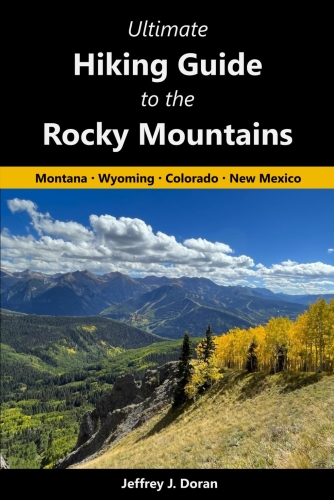
From Montana to New Mexico, the American Rockies stretch for more than a thousand miles. Within this spectacular mountain range are thousands of miles of hiking trails. With such an overwhelming number of options, how will you find and choose the most scenic and rewarding hikes?

Ultimate Hiking Guide to the Rocky Mountains takes all the guesswork out by focusing on some of the most amazing hikes across this range, and provides you with a handpicked list of options that will allow you to make the most of your trips in the Rockies:

Friday, July 25, 2014

Outdoor Recreation Participation Report: Camping and Backpacking Continues to Decline

The Outdoor Foundation is reporting that a record number of Americans participated in at least one outdoor activity in 2013, with nearly 50% of all Americans ages six and older taking part in at least one of the 43 outdoor activities, according to the latest Outdoor Recreation Participation Report. That percentage equates to 142.6 million American outdoor participants. Although the number of participants rose, the percentage of participants fell slightly from 49.4% in 2012 to 49.2% in 2013, due to population increase.

Compared to 2012, participation in outdoor activities increased or remained flat among youth and young adults - signaling a positive trend in America's inactivity crisis. The participation rate among children ages six to 12 rose one percentage point to 64%. Participation among young adults ages 18 to 24 also rose one point to 58%, while hard-to-reach adolescents, ages 13 to 17, remained flat at 60%.

Below are a few stats of interest:

* Participation in day hiking remained relatively flat again for the second year in a row. However, the latest figures don't reflect the strong growth in the outdoor pursuit in recent years. Compared to 2006 (the first year of the study), hiking is up 15.1%. Compared to 2010, participation in hiking has increased by 5.8%.

* Though backpacking has seen an increase in the number of participants over each of the last 2 years, the average number of outings per backpacker has dropped off sharply. As a result, backpacking has dropped out of the top 5 favorite outdoor activities for adults (ages 25+), based on the frequency of activity.

* Camping (within a 1/4 mile of a vehicle or home) continues to decline: down 11% when compared to 2011, and down almost 18% since 2006.

* Participation in adventure racing and triathlons saw the largest increases over the past three years. Adventure racing increased by 28%, while off-road triathlons increased by 25% and road triathlons increased by 10%.

In 2013, the top 5 most popular outdoor activities for adults (ages 25+), based on participation rates were:

1. Running, Jogging and Trail Running - 16.2% of adults
2. Fishing - 14.8% of adults
3. Bicycling (Road, Mountain and BMX) - 13.1% of adults
4. Hiking - 11.4% of adults
5. Camping (Car, Backyard and RV) - 10.6% of adults

The top 5 favorite outdoor activities for adults (ages 25+), based on frequency of activity were:

1. Running, Jogging and Trail Running - 81.4 average outings per runner
2. Bicycling (Road, Mountain and BMX) - 51.7 average outings per cyclist
3. Birdwatching - 37.7 average outings per birdwatcher
4. Wildlife Viewing - 25.2 average outings per viewer
5. Hunting - 24.2 average outings per hunter

The report is based on online and household surveys of more than 19,000 Americans ages six and older, and covers 43 different outdoor activities, making it the largest survey of its kind. To download a complete copy of the 2014 Outdoor Recreation Topline Participation Report, visit The Outdoor Foundation website.


Jeff
Hiking in Glacier National Park

Thursday, May 8, 2014

Glacier Park Campgrounds Begin to Open

Many of the Glacier National Park’s campgrounds will be opening for the summer season in upcoming weeks. Currently, Apgar Campground, located on the west side of the park, is open with services available.

The Apgar Campground is the largest campground in the park and hosts almost 200 camping sites for tents and RV campers. Potable water is accessible in the campground, and restroom facilities provide flush toilets and sinks with running water. All Apgar Campground sites are first-come first-serve, with a summer overnight fee of $20.

Most campgrounds in Glacier are on a first-come first-serve basis. Reservations are available at Fish Creek and St. Mary Campgrounds beginning June 1, and may be made up to six months in advance through the National Recreation Reservation Service or by calling 1-877-444-6777. Campers without prior reservations are also welcome at these campgrounds, as space is available.

Water is available at most campgrounds, but there are no electrical or water hookups at any campground in the park. Dump and water fill stations are available at most campgrounds. Water is not available when a campground is in primitive status. Many campgrounds can accommodate campers and trailers, with some size restrictions.

Campgrounds in primitive status cost $10/night. When campgrounds are in primitive status no water is provided. Any water taken from streams or lakes requires treatment before use. Primitive and winter front-country campgrounds include pit toilets, no running water and only a limited number of sites.

Hiker/bicyclist sites are available at Apgar, Avalanche, Many Glacier, Rising Sun, Sprague Creek, and Two Medicine Campgrounds for $5 per person per night, and at Fish Creek and St. Mary for $8 per person per night.

Group sites are available by reservation for groups of 9 to 24 campers. These sites are located in the Apgar and St. Mary Campgrounds. These sites can be reserved up to one year in advance through the National Recreation Reservation Service or by calling 1-877-444-6777. Many Glacier and Two Medicine Campgrounds have one group site at each campground, and both are on a first-come first-serve basis.

Campers are reminded to keep a clean camp and obey food storage regulations. Animals are attracted to food and food odors. All food, garbage, and equipment used to cook, serve or store food must be kept sealed in a vehicle or in an approved bear-resistant container. For more information about food storage regulations you can visit the park’s website or contact the park at 406-888-7800.

Specific information about each campground, including a map of the sites, operating dates, available services, current and historic fill times, and more is available by visiting http://home.nps.gov/applications/glac/cgstatus/cgstatus.cfm.


Jeff
Hiking in Glacier National Park

Tuesday, November 19, 2013

Grand Teton to Update its Cost Recovery Rates for Backcountry & Special Park Use Permits

Grand Teton National Park will soon update its cost-recovery rate for backcountry camping permits and for special park use permits to reflect the actual cost of operation for these programs. Adjusted charges for these specific permits will become effective beginning January 1, 2014.

Through a recent cost-recovery evaluation, Grand Teton conducted a comprehensive review of the financial aspects of its backcountry camping and special park use permit systems and determined that the park has not recovered the actual costs of operation for several years. The annual revenue under the current permits systems does not fully cover the operational costs of managing these programs. Cost-recovery includes all expenses incurred to process a permit application, monitor a permitted activity, and perform site restoration, when necessary.

In addition, Grand Teton will use an online process for making backcountry camping reservations through Recreation.gov, managed by Reserve America. Transition to Recreation.gov will allow users to plan their trip and receive immediate confirmation, and better facilitate management of the park's backcountry reservations. Advanced reservation requests will be accepted from January 8 through May 15, and updated cost-recovery rates for all backcountry camping permits will be $25, with an additional $10 fee for advanced reservations.

The park's charges for special use permits have not been updated since 2002. Increased oversight and management of special use permits—combined with an increase in the number of applications reviewed and permits issued—resulted in the need to conduct a cost-recovery evaluation of this rate structure as well. Approximately 250–300 special park use applications are received annually, all of which require review. Applications for permits include weddings, commercial filming, special events, scattering of ashes and First Amendment requests; and most of the applications result in the issuance of a permit, and the need for monitoring of the permitted activity.

The adjusted special park use charges for 2014 are: $100 for weddings, $175 for events, $275 for commercial filming less than 6 months, $325 for commercial filming 6–12 months, and no charge for scattering ashes or First Amendment requests.

Application fees cover the costs incurred for processing the permit, as well as for permit review to ensure the information supplied is sufficient to form a decision for issuance. It is a one-time, non-refundable amount submitted by the applicant with his/her completed application. If the application is approved, the permitee may be responsible for additional cost-recovery charges associated with monitoring the activity and for site restoration, if necessary.

In the future, all cost-recovery charges may be re-evaluated annually and adjusted, when necessary.


Jeff
Hiking in Glacier National Park

Thursday, July 18, 2013

Summer Backcountry Camping - Part 2

Yesterday we published a video by Glacier National Park that offered advice to hikers and backpackers with regards to wildlife encounters while out on the trail or in camp. Part 2 of this two-part series discusses weather conditions and camping etiquette:


For more information on camping in Glacier, please click here.


Jeff
Hiking in Glacier.com

Wednesday, July 17, 2013

Summer Backcountry Camping - Part 1

With camping season in full gear right now, I thought I would post a video published by Glacier National Park from a few years ago. This short video offers some sound expert advice for hikers and backpackers who venture into the backcountry, especially in grizzly bear country:


Tomorrow we'll post part 2 from the the two-part series. For more information on camping in Glacier, please click here.

For more information on recreating in bear country, please click here.


Jeff
Hiking in Glacier.com

Thursday, January 31, 2013

Yellowstone Proposes Campground Fee Rate Increase

Yellowstone National Park is seeking public comment on a proposal to increase the daily fee charged to stay in campgrounds operated by the National Park Service.

For the Mammoth Hot Springs and Norris campgrounds which have flush toilets, the daily fee would be increased from $14 to $20.

At Tower Fall, Lewis Lake, Indian Creek, Pebble Creek, and Slough (slew) Creek campgrounds which have vault toilets, the daily camping fee would go from $12 to $15.

Individuals who hold a Senior Pass or Access Pass would continue to receive a 50-percent discount on camping fees charged at these National Park Service operated campgrounds.

Under the current rate structure, Yellowstone's campground fees are lower than those charged by local commercial operators, neighboring National Forests, and Grand Teton National Park for campgrounds with similar facilities.

The Bridge Bay, Canyon, Grant, and Madison campgrounds and the Fishing Bridge RV Park in Yellowstone are operated by Xanterra Parks & Resorts. Daily camping fees at these sites range from $20.50 to $45.00. They would not be affected by this proposal.

An electronic form to submit comments on the internet can be found online here. Comments may be submitted through the website, in person, or by mail to Visitor Services Office, Attention: Campground Fee Rate Increase, National Park Service, and P. O. Box 168, Yellowstone National Park, Wyoming 82190. All comments must be received or postmarked by midnight, February 28, 2013.

Comments will not be accepted by phone, fax, or e-mail, and submitted responses may be made publicly available at any time.

This would be the first camping fee increase in nine years. Yellowstone National Park is planning to implement these rate increases on May 1, 2013.


Jeff
Hiking in Glacier National Park

Monday, October 29, 2012

The American Camper Report

The Outdoor Foundation recently published the American Camper Report, a detailed analysis on camping trends throughout the United States. The report presents information on overall participation, preferences, buying behavior and the future of camping.

The chief takeaway, if we are to believe the headline intro, is that camping participation is growing: "Camping is a true American tradition, and it is gaining in popularity.". The Outdoor Foundation cites that 42.5 million Americans — or 14.9% of the US population over age six — went camping in 2011. This participation rate is up from 39.9 million, or 14.1% of the population, in 2010. However, when viewing participation data over the last several years, based on a graph included with the report, participation has clearly flat-lined since 2006 (the first year data is available). By insinuating a growing trend, I think the Outdoor Foundation has jumped the gun with their overall conclusion. As an indication that the flat-line trend will likely remain in place, the report cites that the average camper went on 4.97 camping trips last year. However, campers are planning an average of only 4.33 camping trips next year, an indication that participation rates may show a decline in the next report.

The American Camper Report does show some pretty interesting trends, however. While conventional tents are still available to traditional campers, many campsites are evolving to more modern tastes, providing amenities such as indoor bathrooms, washers and driers and free Wi-Fi. Others have gone a step further by offering heated pools, waterslides, zip lines, golf carts and a calendar full of activities. KOA Campgrounds provides deluxe cabin rentals with flat screen TVs and air conditioning for customers who want to experience the outdoors with all the conveniences of home.

But is this really camping?

Some of the other key findings from the report that I found interesting, include:

• In 2011, campers spent an impressive 534.9 million days camping, an average of 12.6 days per person.

• Almost all age brackets added participants, except the adolescent group.

• The Mountain Region has the highest camping participation rate, while the South has the lowest.

• State parks are by far the most popular camping destinations.

• Hiking is the most popular activity to participate in while camping.

To read the entire report, please click here.


Jeff
Hiking in Glacier National Park

Friday, May 18, 2012

No can opener? No problem!

Have you ever arrived at your campsite, got a nice cooking fire going, and then realized that you forgot your can opener! No problem! This short video offers a technique that could come in handy some day:


Jeff
Hiking in Glacier.com

Wednesday, April 18, 2012

Book your Montana State Parks campsite online

Montana State Parks is reminding the public that they can book campsite reservations for the 2012 summer season online at stateparks.mt.gov or by phone at 1-855-922-6768.

Start dates for reservations booked online or by phone are for the peak season which starts Friday, May 25 of Memorial Day weekend.

Twenty of Montana’s State Parks are available through the campsite reservation program with 12 of the 20 parks featuring electric hookups. There are more than 500 sites in total to reserve, including several yurts, cabins and tipis.

Montana State Parks reservation campsites: Bannack, Beavertail Hill, Big Arm, Black Sandy, Brush Lake, Cooney, Finley Point, Hell Creek, Lake Mary Ronan, Lewis & Clark Caverns, Logan, Makoshika, Missouri Headwaters, Placid Lake, Salmon Lake, Thompson Falls, Tongue River Reservoir, Wayfarers, West Shore, and Whitefish Lake.

Basic campsite costs: $15 dollars per night for residents and $23 dollars per night for non-residents during peak spring/summer season. To reserve a campsite online or by phone is $10. Montana seniors and residents with disabilities are to phone the call center for accommodations and special rates.

Spontaneous campers are not left out as each park holds back approximately 25% of their campsites outside of the reservation program, for traditional first-come, first served camping visits, which are available starting May 1.

To make a reservation, visit: stateparks.mt.gov.

The campsite reservation program launched in March of 2011 and saw more than 7,500 campers making their reservations through the new program during the 2011 spring/summer season (March – September).


Jeff
Hiking in Glacier.com

Wednesday, March 7, 2012

New website for camping in National Forests

Old man winter may have made a late arrival in your neighborhood but summer and the family camping season is just around the corner. Camping is known to be a good way for families to reconnect, to help strengthen family bonds, and counter the stressful effects of busy lifestyles. Many national forest campgrounds were designed, developed, and are managed for families, making them outstanding and affordable family vacation destinations. Each year more families are discovering great family vacation destinations in national forest and grassland campgrounds.

ForestCamping.com, the U.S. National Forest Campground Guide website, is a complete and comprehensive guide to developed campgrounds in national forests and grasslands. It provides detailed information to campers looking to experience the great outdoors. In addition to managing a website, Fred and Suzi Dow also self-publish Ebook CDs and downloads of eleven U.S. National Forest Campground Guides, which can be purchased online at their website.

Using ForestCamping.com, with more than 2,400 developed campgrounds in 175 national forests and grasslands scattered across the country in 44 states, families can be assured they’ll find a Forest Service campground with what they want to see, do, and enjoy.

Fred and Suzi Dow, authors and publishers of ForestCamping.com, have devoted 17 years to visiting, personally researching, and providing the public with free, detailed information about 175 national forests and grasslands and more than 2,400 personally surveyed campgrounds.

With up to 55 fields of information in each campground review, lots of camping pictures, and authors who have actually visited the camping locations, this looks to be an extremely useful tool.


Jeff
Hiking in Glacier.com

Tuesday, January 10, 2012

Introducing the Hexa Pot

On the surface this sounds like a great idea. The yet to be formerly launched Hexa Pot is a single-use outdoor cookware pot formed from an ultra-light, 100% biodegradable and eco-friendly paper material to be used for picnics, camping, backpacking, and traveling.

The Hexa Pot can be used for boiling water, or for cooking meals such as pasta, soup, chili and ramen noodles. The disposable pots may also come in handy in the event of an emergency situation when sterilizing and disinfecting contaminated water is necessary for making it drinkable.

Energia USA, the manufacturer of Hexa Pot, pitches these selling points on its website:

Hexa Pot can be a blessing on your hands due to it being a single use product, no dish washing is required. You can save time, water, electricity, and money spent on dish washing detergent. Ultra-light and convenient when carried around. It helps save space and time when on the go for outdoor activities. Safe alternative cookware when compared to your traditional stainless steel pots and pans that may produce harmful health effects caused from iron, nickel and chromium.

The Hexa Pot will biodegrade within 24-36 months, when disposed in the right environment. I take this to mean not in a hole dug next to your campsite, or thrown into a fire. So how many people will actually take it home with them?

Right now Energia USA is trying to raise $25,000 by Friday, January 27th, through a Kickstarter Campaign in order to help launch this project.

The Los Angeles based company will also unveil its products at the ASD Las Vegas on March 25-28, 2012.

Here's a short product demo from the manufacturer:


Jeff
Hiking in Glacier.com