
Showing posts with label Wildlife. Show all posts

Thursday, December 5, 2024

Five Great Reasons to Visit Grand Teton National Park

Rising more than 7000 feet above Jackson Hole, the lofty peaks of Grand Teton National Park provide one of the most dramatic landscapes in the entire world. Although many people seem to treat it as an afterthought, only visiting the park as a side trip while visiting its more famous neighbor to the north, more time and focus should be given to this stunning landscape. Within its 310,000 acres the majestic mountains of the Teton Range are home to a wide variety of wildlife, eight peaks that top out above 12,000 feet, more than 100 alpine and backcountry lakes, and more than 240 miles of trails that provide intimate access to all of this incredibly beautiful scenery. The following are among some of the top reasons why you should pay a visit to this amazing park:

1) Cascade Canyon

The Cascade Canyon Trail is widely touted as one of the best hikes in the entire National Park System. In addition to the stunning views of 12,928-foot Mt. Owen, the trail visits Hidden Falls and Inspiration Point. The route is also known for the wide variety of wildlife that's frequently seen, especially bears and moose.


2) Lake Views

Lying along the eastern base of the Teton Range is a series of glacially-carved lakes. Rising sharply above their western shores, the views of the rugged mountains are stunning and dramatic. From the shores of Jackson, Leigh, Jenny, Phelps, Bradley and Taggart Lakes, hikers will enjoy some of the most striking views in the park, especially in the early morning.


3) Wildlife

Although Yellowstone rightfully receives a lot of attention for its wildlife viewing opportunities, the Grand Tetons are also known for its diversity of wildlife. The rugged mountains provide habitat to a wide variety of wildlife, including black bears, grizzly bears, elk, bison, bighorn sheep, moose, pronghorn, wolves, fox, lynx, bobcats and mountain lions. There are also more than 300 species of birds, including trumpeter swans, ospreys and bald eagles. A drive along Moose-Wilson Road is a popular way of spotting mega fauna, such as bears and moose. However, hikes such as Amphitheater Lake, Hermitage Point, Moose Ponds and the Emma Matilda Lake Loop are all great choices if you're wishing to spot wildlife in the backcountry.


4) Photography

The abrupt rise of the Tetons from the valley floor arguably makes them one of the most photogenic mountain ranges in the world. As a result, professional and amateur photographers alike will enjoy a multitude of photo opportunities around the park. Some of the best spots for getting that perfect shot include Mormon Row, Oxbow Bend, Schwabacher’s Landing, as well as the Snake River Overlook, which was made famous by Ansel Adams' 1942 photograph. Of course all of the backcountry locations mentioned above will also provide outstanding photo opportunities.


5) Snake River Float Trip

The Snake River meanders along the sage brush flats below the Teton Range, and provides park visitors with the unique opportunity of enjoying the majestic mountain scenery from a raft. Although outfitters offer trips throughout the day, I highly recommend the morning trips, as the mountains typically look their finest when bathed in the glow of early morning sunshine. Morning also provides the best opportunity for spotting wildlife along the river banks, including bald eagles.


With more than 240 miles of trails meandering throughout the park, hiking is the absolute best way to see Grand Teton National Park. In addition to the hikes listed above, the park offers a variety of other outstanding hikes. If you do plan to visit Grand Teton this year, please note that our hiking website also offers a wide variety of accommodation listings as well as other things to do to help with all your vacation planning.


                *******************************************************************************

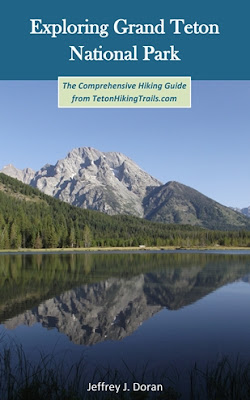
Rising more than 7000 feet above Jackson Hole, the majestic mountains of Grand Teton National Park provide one of the most dramatic landscapes in the world. With more than 240 miles of trails meandering throughout this park, how will you find and choose the most scenic and rewarding hikes?

Exploring Grand Teton National Park takes all the guesswork out by focusing on the most amazing hikes, and provides you with handpicked recommendations that will allow you to make the most of your trip to Grand Teton:

Tuesday, July 2, 2013

Glacier Asks Visitors to View Wildlife from Safe Distance

Distance requirements between people and wildlife in Glacier National Park have been implemented to prevent negative human-wildlife encounters and decrease wildlife habituation. Visitors are required to keep a distance of at least 100 yards from bears and wolves, and 25 yards from any other wildlife including nesting birds.

Acting Glacier National Park Superintendent Kym Hall said, "One of the values of Glacier National Park is the opportunity to view a diversity of wildlife." Visitor and animal safety is a priority and Hall asks visitors to respect the viewing distances identified.

Animals in Glacier National Park are wild and their behavior is often unpredictable. Maintaining a safe distance from wildlife is necessary for visitor and animal safety. Disturbance to wildlife can inflict major stress on populations, especially animals with young. Visitors are encouraged to use binoculars, spotting scopes, or telephoto lenses for safe wildlife viewing. Always use designated roadside pullouts when viewing wildlife from your vehicle.

Willfully disturbing or interfering with the unimpeded movement of wildlife is illegal within any distance. Failure to comply with park wildlife protection regulations may result in a fine and/or required court appearance. This regulation is consistent with other national parks, including Yellowstone and Grand Teton National Parks.

Approved management or research activities or persons in compliance with approved written protocol may be exempt from the regulations.

Specific information about the wildlife protection and distance regulations can be found in the Glacier National Park 2013 Compendium which is located on the park's website.


Jeff
Hiking Glacier National Park

Thursday, August 30, 2012

Visitors Urged to Enjoy Yellowstone Wildlife at a Safe Distance

One sure sign that fall is just around the corner is that some animals are beginning to leave the high country for lower elevations.

The most obvious change in Yellowstone occurs in Mammoth Hot Springs. Typically, several large bull elk venture into the Mammoth area in the fall to compete for the attention of cow elk. Bulls are much more aggressive toward both people and vehicles this time of year and can be a threat to both people and property. Several vehicles are damaged by elk every year, and on occasion people are charged by elk and are injured.

A dedicated group of park staff and volunteers can be seen patrolling the Mammoth Hot Springs area when elk are present, attempting to keep elk and visitors a safe distance away from each other. Park regulations require visitors to stay a minimum of 25 yards - the length of two regular school buses - away from most large animals.

Grizzly bears and black bears are moving to higher elevations to feed on this year's abundant crop of whitebark pine seeds, in order to store the calories they need to sustain themselves during winter hibernation. They may be encountered along roads through mountain passes or on some hiking trails.

Park regulations require people to stay a minimum of 100 yards - the length of a football field - away from bears and wolves at all times. If you see a bear along the road, move off the road and park on the shoulder or in a pullout and stay in your vehicle to watch the bear. In any case, use your binoculars, telescope, or telephoto lens to get a closer look at the bear rather than walking toward the bear.

Visitors are reminded to keep food, garbage, barbecue grills and other attractants stored in hard-sided vehicles or bear-proof food storage boxes when not in immediate use. Bears that get human food or garbage usually become aggressive in their efforts to get it again. This can result in property damage and on rare occasion injury to people. When bears become a threat to human safety, they may have to be captured and euthanized.

Fall also brings changing weather conditions. Along with some temporary closures due to fire activity, visitors are encouraged to stop at a visitor center or ranger station for the latest update on trail conditions and park regulations before setting out on the trail. A reminder, a permit is required to stay overnight in the backcountry.

Hikers and backpackers are encouraged to travel in groups of three or more, make noise on the trail, and keep an eye out for bears. Bear pepper spray has proven to be a good last line of defense if you keep it handy and use it according to directions when the bear is within 50 feet. Be extra vigilant if a sign on the trail says a bear has been frequenting an area, and if an area is posted closed due to bear activity, stay out!

Bear sightings should be reported to the nearest visitor center or ranger station as soon as possible.


Jeff
Glacier National Park Trails

Saturday, April 28, 2012

FWP To Begin Bison Management Plan Discussions

Earlier this week Montana Fish, Wildlife & Parks announced that they will be hosting a series of public meetings this spring as a first step toward developing a long-term bison conservation and management plan for the state. The plan will be developed through a programmatic environmental impact statement, which will address issues associated with bison and options for their long-term management as a Montana wildlife species.

The programmatic EIS, which will take about three years to complete, will examine an array of issues and possible alternatives—including no action—and each alternative’s potential beneficial and adverse environmental, social, and economic impact.

FWP will begin a formal public “scoping” process as required under the Montana Environmental Policy Act. Public scoping is aimed at identifying issues, impacts, public concerns, and conservation challenges and opportunities. The comments will assist FWP in further identifying issues and developing possible alternatives.

Some issues already identified include: (1) the risk of bison spreading disease to domestic livestock, (2) competition between bison and other wildlife, (3) competition between bison and livestock for rangeland, (4) damage to fencing, (5) public safety, and (6) the legal classification and status of bison in Montana.

Eight scoping meetings are scheduled for May. The sessions will be held from 6-9 p.m., with the first hour dedicated to informal discussions and the remainder of the evening set for recording scoping comments. Here are the meeting dates and locations:

May 14 - Missoula Holiday Inn Downtown – 200 S. Pattee St.
May 15 - Kalispell Red Lion Hotel – 20 N. Main St.
May 16 - Glasgow Cottonwood Inn – 45 1st Ave NE
May 17 - Helena Montana Wild Center – 2668 Broadwater Ave.
May 21 - Billings Holiday Inn Grand MT Convention Center – 5500 Midland Rd.
May 22 - Miles City BLM conference room, BLM center – 111 Garryowen Rd.
May 23 - Great Falls Townhouse Inn – 1411 10th Ave. S.
May 24 - Bozeman Holiday Inn on Baxter – 5 Baxter Lane

Last year, in anticipation of a programmatic EIS proposal, FWP prepared a summary of bison history and activities in the West that offers information related to the possible restoration of bison in Montana. The “Bison Background Document” presents information on the bison's genetic and disease history, management concerns and a brief synopsis of different bison management philosophies among an array of private groups and organizations. The document is available online here. The document may also be obtained on CD or other formats by calling Margaret Morelli at 406-994-6780 or via email at MMorelli@mt.gov.


Jeff
Hiking in Glacier.com