The following is an excerpt from Ramble On: A History of Hiking:
In all likelihood, Norwich, Vermont native Alden Partridge is America’s first avid hiker. Although he’s probably best known as the fifth superintendent of the United States Military Academy at West Point, he also established a series of private military academies. According
to A History of Norwich, Vermont, Captain Partridge was also “a noted pedestrian, on several occasions walking sixty miles a day, and once pacing off seventy miles within that limit.” As an example of his endurance, strength and tenacity, in 1818 he undertook an extended excursion that included ascents of both Mt. Mansfield and the Camel’s Hump, the highest and third-highest peaks in Vermont. The entire trip, which covered roughly 200 miles, was made within a week, much of it in cold, drenching rain that involved tough, challenging bushwhacks up both mountains. In 1830, at the age of 45, Captain Partridge trekked to Massachusetts and back, a roundtrip hike that covered roughly 300 miles and ended with a grueling 64-mile march on the last day. During his fairly long life, the indefatigable military instructor recorded numerous extended treks across the Northeast, as well as ascents of several prominent peaks, including Mt. Washington, Mt. Lafayette, Mt. Equinox, Mt. Ascutney, Killington Peak, Grand Monadnock and Mt. Moosilauke. In an article published on the Norwich University website, journalist and historian Mark Bushnell proclaimed Partridge to be “the first extreme hiker.” According to Bushnell, Partridge also “wrote widely circulated newspaper columns about his wilderness treks and in so doing helped popularize the sport of hiking.”
Virtually no one went hiking before the 19th century. What occurred that inspired ordinary people to take a walk through the woods for pleasure?Ramble On: A History of Hiking explores the rich history of hiking, and how it evolved into one of the most popular pastimes in the world.
The National Park Service (NPS) signed a Finding of No Significant Impact (FONSI) and associated Wetlands/Floodplains Statement of Findings (SOF) to reconstruct the North Entrance Road between Mammoth Hot Springs, Wyoming, and Gardiner, Montana, in Yellowstone National Park.
In January 2026, NPS, in cooperation with the Federal Highway Administration, Western Federal Lands (FHWA-WFL), prepared an environmental assessment (EA) to assess potential impacts for proposed reconstruction of the North Entrance Road. The FONSI, approved by the NPS Regional Director, describes the selected action and establishes that there will be no significant impact on the environment. The preferred Alternative 2: Center Alignment was selected.
The purpose of the project is to provide reliable and essential long-term access for park visitors, staff, emergency responders, commercial users and residents of gateway communities.
Yellowstone experienced a 500-year flood event on June 13, 2022. The flood destroyed infrastructure in the northern portion of the park, including several sections of the North Entrance Road, and segments of the Northeast Entrance Road between Tower Junction and Cooke City/Silver Gate, Montana. Both roads are open year-round and serve as the only winter vehicle access in and out of the park. After briefly closing the park to regular visitor traffic on June 13, 2022, a temporary North Entrance Road was constructed between Mammoth Hot Springs and Gardiner using the historic Old Gardiner Road (OGR) wagon trail, which opened to the public Oct. 30, 2022. Although this temporary road has successfully provided visitor access to the park, it was not engineered for the long-term. The selected alternative will turn the OGR into a multi-use recreation trail and most of the damaged road, located in the Gardner Canyon, will be reclaimed.
The FONSI and other project materials can be viewed and downloaded from the NPS Planning, Environment and Public Comment website.
This Saturday, September 26, an estimated tens of thousands of volunteers across the country will join together for the 33rd annual National Public Lands Day (NPLD), which supports and celebrates America's public lands through activities like trail maintenance, tree planting, beach clean-ups, and more. NPLD is a fee-free day that not only supports conservation efforts but invites participants to experience and appreciate the beauty of America's public lands.
This year's theme, "Caring for our Shared America," calls on all of us to show up for the parks, trails, forests, and waterways we hold in common. Hosted by the National Environmental Education Foundation, National Public Lands Day is a collective act of care that brings communities together and strengthens our shared American story.
National Public Lands Day is more than a clean-up—it connects communities, provides meaningful outdoor experiences for attendees, and showcases the educational, recreational, and health benefits of public lands. The excitement surrounding NPLD also provides a boost in volunteer recruitment for federal, state, and local public land managers. Last year, over 52,000 volunteers participated in more than 750 events across the US, representing $10.5 million in volunteer service.
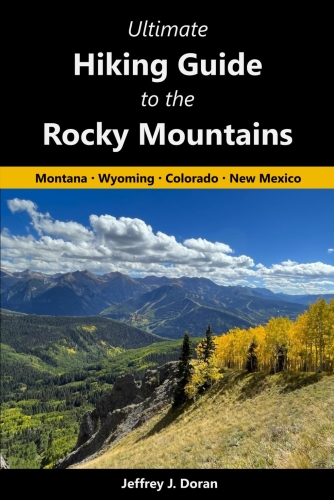
From Montana to New Mexico, the American Rockies stretch for more than a thousand miles. Within this spectacular mountain range are thousands of miles of hiking trails. With such an overwhelming number of options, how will you find and choose the most scenic and rewarding hikes?
Ultimate Hiking Guide to the Rocky Mountains takes all the guesswork out by focusing on some of the most amazing hikes across this range, and provides you with a handpicked list of options that will allow you to make the most of your trips in the Rockies:
The following is an excerpt from Ramble On: A History of Hiking:
Among the more significant events that would help spur growth in the budding endeavor of walking for pleasure was the publication of one of the first modern travel guides. In 1778, an English priest by the name of Thomas West published A Guide to the Lakes, which detailed the landscape and scenery of the Lake District in northwestern England. While many say the guide marked the advent of modern tourism, the book also helped to promote the idea of walking for leisurely purposes. Perhaps more importantly, it also advanced the emerging concept of seeking out sublime and picturesque viewpoints, or what he called “stations,” for purposes of appreciating natural landscapes. Modern historians contend that this was a new way of understanding nature and mountains, which in a few years would become an integral part of what is now known as Romanticism. Instead of looking at mountains with fear or as obstacles, the Romantics proposed they should be seen for their rugged beauty, and as sources of profound awe and spiritual inspiration. West underscored this notion by declaring:
Whoever takes a walk into these scenes must return penetrated with a sense of the creator’s power in heaping mountains upon mountains, and enthroning rocks upon rocks. And such exhibitions of sublime and beautiful objects cannot but excite at once both rapture and reverence.
Learn more about Thomas West and how the Romantics inspired people to take walks in nature for pleasure in Ramble On: A History of Hiking.
Virtually no one went hiking before the 19th century. What occurred that inspired ordinary people to take a walk through the woods for pleasure?Ramble On: A History of Hiking explores the rich history of hiking, and how it evolved into one of the most popular pastimes in the world.
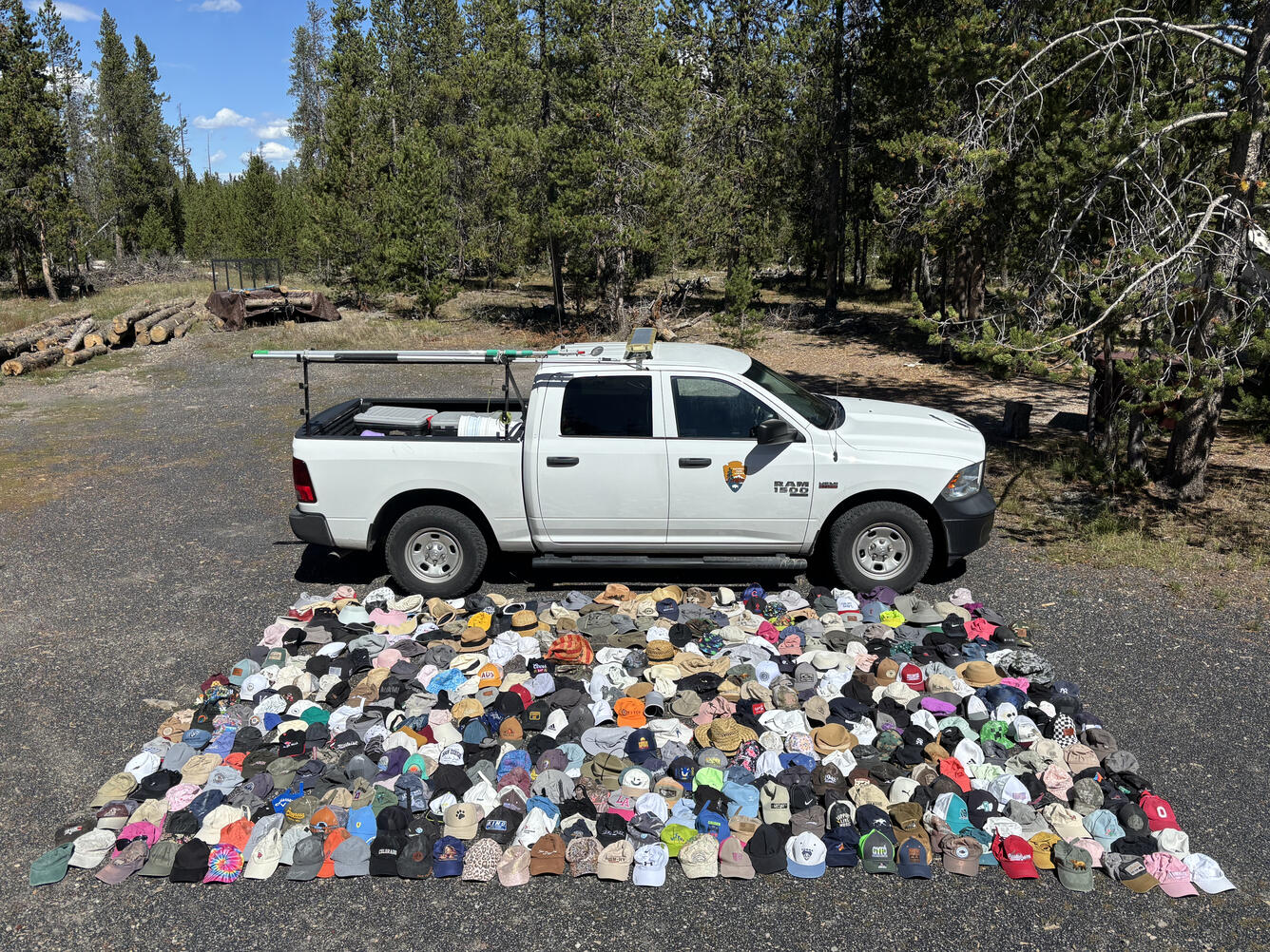
The latest edition of Yellowstone Caldera Chronicles features an itemization of all the trash left behind by visitors in the park’s hydrothermal areas this year. As a result, Yellowstone National Park’s Geology team has collected some pretty interesting stuff.
According to the article, "As of early September 2026, Yellowstone’s Geology team has removed more than 20,100 pieces of trash, 5,600 rocks and sticks, and over 280 hats from hydrothermal areas around the park—a record-setting year so far! Among all that debris have been a lot of interesting items, some wacky, some yucky, and others... puzzling?
Here are (some of) the 2026 hydrothermal debris highlights:
Most head-scratching: Some of the more bizarre things to find in a hydrothermal area: 5 Airpods, 3 Delta Flight Pins, an inhaler, 3 golf tees, and an Uno card.
Most common: Besides the abundant plastic and paper trash collected by the team, the most common items found in hydrothermal areas are camera lens caps (54), hair ties (47), binkies (17), hotel key cards (20), pencils (42), and sunglasses (36)!
Grossest: In 2026, the Geology team found 6 (!) Invisalign retainers, 15 fake nails, numerous floss picks, and one lump of glittery pink children’s slime stuck to a handful of geyserite sinter pieces.
Grand Teton National Park posted this on their social media yesterday:
On Friday, September 11, Grand Teton National Park staff lethally removed a black bear from the Delta Lake area after a concerning pattern of behavior, from both the bear and visitors, escalated over several days.
Earlier this year, park staff received several reports of a black bear approaching visitors near Delta Lake. At the time, there was not enough information to determine whether the behavior represented an emerging food-conditioning issue or an isolated occurrence.
That changed last week.
The bear received multiple human food rewards and repeatedly approached people. Park staff increased monitoring in the area and found the bear unusually difficult to haze away, its behavior consistent with conditioning to human foods.
Park managers determined that the repeated food rewards, escalating proximity to people and increasingly food-conditioned behavior created an unacceptable safety risk. Because Delta Lake is a remote backcountry location, wildlife staff darted the bear to immobilize it and then euthanized it on site. The bear carcass was flown out of the backcountry the next morning.
We need to be clear—this bear was lethally removed because of poor decisions made by park visitors. It is everyone’s responsibility to help keep bears wild: Never leave food unattended, even for a moment. Gather all your belongings, especially your food, if a bear approaches. If you have time to grab your phone, you have time to grab your food.
A bear that gets a food reward can learn that approaching people pays off. What may seem like a small decision in the moment can have serious consequences for the bear, other visitors and park staff. Help us keep bears wild by making the right choice every time.
On this date in 1855, 22-year-old Lizzie Bourne of Kennebunk, Maine became the first woman to perish while climbing Mt. Washington, and quite possibly the first female to die while hiking in America. On that late summer day, Lizzie had planned to hike to the Tip Top House atop Mount Washington with her uncle George and her cousin Lucy. Though early morning rain forced the group to postpone their trek, the weather eventually cleared, and they set out after lunch by proceeding up the partially completed carriage road. As the party climbed higher, however, they encountered another round of foul weather while ascending the Glen House Bridle Path, which continued to worsen with each step forward. In a letter to the Boston Journal, which was intended to provide “a correct account of the whole affair,” George Bourne attested that “Elizabeth began to show signs of weariness, and needed assistance” as they continued towards the summit. With night rapidly falling upon the mountains, darkness and fog conspired to obscure the view of their destination. Extreme fatigue also crept into each of them. Not knowing exactly where they were or how far they were from their objective, the trio made the decision to lie down on the trail and wait out the night. Despite building a windbreak out of nearby rocks, George was convinced that each of them would perish as a result of the extreme cold and violent wind. Indeed, that night, around ten o'clock, Lizzie quietly passed away while lying on the icy trail. In his letter to the Boston Journal, Bourne stated that it was “evident that Elizabeth did not die from the cold alone, but from some organic affection of the heart or lungs, induced by fatigue and exposure.”
With the arrival of daylight the next morning, to their complete and utter horror, George and Lucy discovered they were within sight of the Tip Top House. Had they known they were that close, they could’ve easily made it to safety, and Lizzie likely would’ve survived. After her death, tourists and hikers began piling rocks on the spot where she succumbed. A stone monument now stands near the site to mark and commemorate her passing.
Did Lizzie’s attire contribute to her death? I think it’s very possible that it did. She wore a heavy skirt, petticoat, pantaloons and stockings. Nicholas Howe, author of Not Without Peril: 150 Years Of Misadventure On The Presidential Range Of New Hampshire, estimates that Lizzie may have worn as much as 45 yards of fabric! After the outfit was soaked in cold rain, there’s no doubt this would’ve weighed her down, resulting in more stress on her heart, and certainly would’ve accelerated the effects of fatigue, exposure and hypothermia.
Ramble On: A History of Hiking chronicles the evolution of hiking gear and apparel, including many other stories about the attire both men and women wore during the early years of the sport. This new, improved and expanded edition on hiking history is available on Amazon.
Virtually no one went hiking before the 19th century. What occurred that inspired ordinary people to take a walk through the woods for pleasure?Ramble On: A History of Hiking explores the rich history of hiking, and how it evolved into one of the most popular pastimes in the world.
Going-to-the-Sun Road has reopened after park officials made the proactive decision to close it at 5 p.m. on September 6, 2026, due to heavy rain and possible rockfall that made the road susceptible to flooding and mudslides.
Park rangers accessed the roadway and after evaluating today's weather forecast, opened the road around 2 p.m. this afternoon. The road had been closed from Avalanche to Jackson Glacier Overlook.
Check the weather forecast and park road status before you visit, dress for varying degrees of weather, and be on alert for potential hazards on roadways and trails. Check the park website for the most up to date information. Visitors can also sign up for park notifications which include road status updates by texting GNPROADS to 333111.
If you've ever had the pleasure to visit the Many Glacier area, chances are you're familiar with Chief Two Guns, the tour boat that cruises the waters of Swiftcurrent Lake. Many people take this boat to shorten their hikes up to Grinnell Glacier or Grinnell Lake:
Many people, however, may not be aware that Chief Two Guns was a real person. Born in 1872, Chief John Two Guns White Calf was the son of White Calf, who was known as the last tribal chief of the Pikuni Blackfeet, and was responsible for many of the Blackfoot Tribe's treaties, including the sale of lands that would become Glacier National Park.
After the death of his father in 1902, Two Guns became a tribal leader, and would arguably become one of the most famous Native Americans in the 20th century. One of his claims to fame is that he was a model for the Indian head nickel, more commonly referred to as the Buffalo nickel. Actually, he was among a couple of models that were used to create a composite image of an Indian -- or maybe not.
The famous five-cent piece, designed by sculptor James Fraser, was issued by the U.S. Mint between 1913 and 1938. Fraser claimed to have used Iron Tail, Two Moons, "and one or two others." Fraser would later write that he had used three Indians for the piece, including "Irontail, the best Indian head I can remember. The other one was Two Moons, the other I cannot recall." However, Chief Two Guns always claimed that he was the other model, and based on what I've read there was much controversy, or even political conspiracy as to why he was never given credit for being the third model.
In short, some in the U.S. Government feared that the influencial Native American would try to incite his tribe into a war with the United States in order to regain lands that were ceded to the country for the future national park. By refusing to recognize him as a model for the nickel, government officials believed they could discredit Two Guns, and thus limit his influence within the tribe. The dispute between the United States and Two Guns arose as a result of the government's refusal to honor the stipulations of the 1895 treaty, which sold the Blackfoot lands that would become the eastern portion of Glacier National Park. Two Guns eventually traveled to Washington D.C. to confront the Commissioner of Indian Affairs about the funds that were still owed to the Blackfeet tribe. After telling the Commissioner that he wouldn't leave until he had their money, the Commissioner finally relented and handed him a check.
In The Father of Glacier National Park, the author, Hugh Grinnell, relates this quite hilarious tale where Two Guns effectively and emphatically makes his claim to being the model for the coin:
When meeting visitors during the Great Northern exposition in Washington D.C., one year, he was approached by a U.S. congressman who gave Two Guns his business card. Two Guns reached into his pocket and retrieved an Indian head nickel, gave it the congressman and said, "Here is my card".
Here's the famous Indian head nickel:
Below is a short video from a 1926 Fulton Petroleum business film in which Chief Two Guns appears. You be the judge as to whether he was one of the models:
Long after his death, Chief Two Guns White Calf would once again gain national fame and become a symbol in American pop culture. Frustrated by the simple burgundy and gold "R" logo on the helmets of the Washington D.C. pro football team, Walter “Blackie” Wetzel submitted several design proposals to Redskins team owner Jack Kent Cooke in 1971. Wetzel thought that a depiction of a Native American would be a much better representation for the Redskins name. Born near Cut Bank in 1915, Wetzel grew up on the Blackfeet Reservation. As an adult, he rose through the ranks of the Blackfeet tribal council, and in 1960, was elected as president of the National Congress of American Indians in Washington, D.C. In 1972, after reviewing the various design proposals, the Washington Redskins adopted a new logo. The team ultimately chose the depiction of Chief Two Guns as their new logo, which would remain in place until 2020:
In recent years, Wetzel's son, Donald, stated that his father "had a vision of putting a real Indian on that helmet." He also added, “The Native Americans were forgotten people. That logo, lets people know these people exist," and that "It's a symbol of red nation unity."
Virtually no one went hiking before the 19th century. What occurred that inspired ordinary people to take a walk through the woods for pleasure?Ramble On: A History of Hiking explores the rich history of hiking, and how it evolved into one of the most popular pastimes in the world.
Glacier National Park today announced that shuttle service and three-hour time limit for parking at Logan Pass will end for the season. Parking at Logan Pass will return to first-come, first-served availability, allowing the public to park without a time limit until the alpine section of Going-to-the-Sun Road closes for the winter season.
The Logan Pass Shuttle and Timed Parking at Logan Pass were new programs piloted for the first time in 2026. The program improved public access to Logan Pass by increasing vehicle turnover throughout the day compared to previous years, allowing more people touring Going-to-the-Sun Road to reliably park at Logan Pass to access visitor services, facilities and trails.
“On most days we issued 1,200-1,300 free permits from onsite kiosks for three-hour parking at Logan Pass,” said Glacier National Park Superintendent Dave Roemer. “By utilizing stand-by access, we filled seats that were available and provided service to Logan Pass that maximized ridership. This new reservation program significantly reduced wait times at boarding and pickup locations compared to previous years.”
Logan Pass has 235 parking spaces and issued 1,200 – 1,300 free permits from onsite kiosks for three-hour parking. Available data suggests there was significant turn over and more visitors were able to access and use this parking area during their visit. During peak hours, about 100 permits were issued per hour, meaning parking spaces were regularly freed up and taken by new visitors throughout the day.
The redesigned shuttle service offered visitors reservable early morning shuttles, beginning at 6 a.m., to facilitate longer day-use itineraries, like hiking the Highland Trail, from Logan Pass.
The park continues to refine transportation and access for visitors while safeguarding park resources.
Logan Pass Visitor Center seasonal updates:
* The visitor center will be open from 9 a.m. to 7 p.m. through Sept. 13.
* Reduced hours will begin on Sept. 13 and be open from 9 a.m. through 4 p.m.
* The visitor center will close for the season after Sept. 27.
* Water at Logan Pass will be turned off for the season on September 8, 2026. Visitors should be prepared and bring their own potable water, as bottled water is not available to purchase at the visitor center.
* For the most current operation hours and information, please visit the Glacier National Park website.
Glacier National Park preserves more than a million acres of some of the most spectacular scenery on Earth. With more than 740 miles of trails meandering throughout this vast park, how will you find and choose the most scenic and rewarding hikes?
Exploring Glacier National Park takes all the guesswork out by focusing on the most amazing hikes, and provides you with handpicked recommendations that will allow you to make the most of your trip to Glacier:
Glacier National Park is implementing a temporary road closure of the alpine sections of Going-to-the-Sun Road. The closure will extend from Avalanche to Jackson Glacier Overlook at 5:00 p.m. on Sunday, September 6, 2026. As of today, it's not clear whether the road has been reopened or not. I'm seeing conflicting information. The park website seems to indicate that it's still closed: https://www.nps.gov/glac/planyourvisit/directions.htm
Heavy rainfall is predicted across northwestern Montana beginning on the evening of September 6, 2026, followed by strong thunderstorms that are expected to continue through September 8, 2026. Learn more at the National Weather Service website.
The Logan Pass Shuttle will run normally today, September 6, 2026, with last shuttle departure from Logan Pass westbound at 7:30 p.m. and eastbound at 8:00 p.m. Shuttles will not run tomorrow, September 7, 2026, and regular shuttle service will end for the 2026 season after September 7, 2026.
Visitors should expect detours, delays, and limited access while crews respond to hazardous conditions created by fast‑moving water, debris, and saturated soils.
Glacier National Park will evaluate and re-open areas when conditions improve.
Visitors are reminded that weather conditions can change quickly, and park travelers should always be prepared for inclement weather. Check the park website for the most up to date information. Visitors can also sign up for GNP notifications to receive road status updates by texting GNPROADS to 333111.
Did you know that there were a total of nine backcountry chalets in Glacier National Park at one point? You're probably already aware of Sperry and Granite Park Chalets. So, what ever happened to the other seven chalets?
In the early 1900s, some Americans were becoming alarmed over the increased spending of American dollars on European travel. While discussing Glacier one day, Senator "Pitchfork Ben" Tillman of South Carolina stated: "It is very ridiculous to me to see the amount of money spent by Americans to see the scenery of Europe without having first seen what we have at home." This concern provided one of the motivations for creating a national park at Glacier. Having an "American Alps," or a "Switzerland of the United States," such as Glacier, allowed America to compete against Canadian and European resorts and tourist attractions.
The Great Northern Railway also played an extremely important role in the establishment of Glacier as a national park during this time period. The Great Northern had constructed a rail line along the southern edge of Glacier, and saw the establishment of a national park as a way of increasing passengers on their trains, which in-turn would help to increase their revenues.
So, it was against this backdrop that the president of the Great Northern Railway, Louis W. Hill, began building a number of hotels and chalets throughout the park in the 1910s as a way of promoting tourism. These buildings were modeled on Swiss architecture as part of Hill's plan to portray Glacier as the "American Alps" or "America's Switzerland." Included in this project was a network of nine European-style chalet complexes. Thus, leaving from one of Hill's luxury lodges in the frontcountry, guests could hike or ride to one these rustic chalets in less than a day.
Two Medicine Chalet:
The chalets, built between 1910 and 1915, included Sperry, Granite Park, Cut Bank, Belton, Going-to-the-Sun (Sun Point), St. Mary, Gunsight Lake, Many Glacier, and one of the Two-Medicine Chalets (the other was converted into a store, which is still in use today). In their prime, several of the Chalets would host as many as 100 to 150 guests per night.
The Sun Chalets:
Today, only Sperry and Granite Park remain. Both owe their survival to the use of native stone as their primary construction material. The masonry of these chalets made it possible to withstand Montana’s brutal winters. In contrast, the wooden structures of the other chalets deteriorated so badly that many had to be razed during the late 1940s.
Granite Park Chalet:
The first chalet to meet its demise was Gunsight Lake when it was destroyed by an avalanche in 1916. The Many Glacier Chalets burned down during a massive forest fire in 1936. During WWII, the remainder of the chalets were closed. The lack of use during the war years forced a reassessment of the facilities, and by 1944 park officials agreed that the St. Mary Chalet was no longer necessary, and was subsequently destroyed. Similarly, the chalets at Cut Bank and Sun Point were regarded as "beyond repair" and an "eyesore," and were destroyed by 1949. Finally, the structure used for lodging at Two-Medicine was razed and burned in 1956.
St. Mary Chalet:
Cut Bank Chalet:
It’s a shame that America had to lose these historic structures. Too bad the Great Northern Railway didn’t have the foresight to build more of the chalets out of native stone. Modern day hikers would have even more overnight destinations from which to consider - without having to rough it!.
Virtually no one went hiking before the 19th century. What occurred that inspired ordinary people to take a walk through the woods for pleasure?Ramble On: A History of Hiking explores the rich history of hiking, and how it evolved into one of the most popular pastimes in the world.
Evidence at the scene of a grizzly bear attack near Columbia Falls reveal the bear involved was a female with at least one cub of the year.
The attack occurred around 7 p.m. on Aug 31. The victim was a woman walking with her dog on the Cedar Flats trail complex north of Columbia falls. The woamn sustained significant injuries and was transported to Logan Health Medical Center for treatment.
Investigators also located a cached whitetail deer carcass approximately 100 yards off the trail. Given the presence of the cub, the nearby food resource, and other information, Montana Fish, Wildlife & Parks specialists have concluded the incident was a surprise defensive encounter. Because of the circumstances and the nature of the attack, no further action will be taken to locate the bear. For public safety, the area will remain closed until further notice. The victim’s dog sustained no injuries and has since been reunited with family.
“This unexpected defensive encounter is truly unfortunate,” said FWP Director, Christy Clark. “Our thoughts are with the victim and their loved ones during this difficult time.”
FWP cannot release the identity or health status of the victim.
Glacier National Park posted this on their social media today:
With Glacier’s 2026 summer season winding down, a lot of things are changing in the park! Before heading to Glacier, make sure to check for updates, closures, and other information that may impact your visit.
Here are some upcoming changes to be aware of:
🚐The Logan Pass shuttle service is ending for the season. Labor Day (9/7) is the last day of shuttle service up to Logan Pass. If you are planning a trip after September 7 and you are going to be coming to the park in an oversized vehicle or RV, check out our Going-to-the-Sun Road General Info page before arriving to learn about the vehicle size restrictions!
⏱️The three-hour parking limit at Logan Pass will also end on Labor Day (9/7). Be prepared for possible congestion and short-term closures at the Logan Pass parking lot.
💦Water filling stations and flush toilet access at Logan Pass will become unavailable beginning on 9/8. If you are planning on doing any of the hikes in the area, make sure you bring enough water with you. You will not be able to fill up at Logan Pass!
🚽Vault toilets will still be available at Logan Pass until Going-to-the-Sun Road closes for the season.
Check the park’s website or stay tuned here to see what other changes are happening in the park!